- 1 The Job in One Snapshot
- 2 A Real Day, Hour by Hour
- 3 Morning: Prep & the First Inspection
- 4 Inside the Inspection: What You Actually Check
- 5 Midday: Report Writing & Walkthroughs
- 6 Afternoon: Second Job & Admin
- 7 Evening: Delivery, Follow-Up & Marketing
- 8 How the Day Changes by Season
- 9 The Pros and Cons, Honestly
- 10 Is This Career a Fit for You?
- 11 What the Day Earns You
- 12 Frequently Asked Questions
Quick Answer
A home inspector's day blends field work and desk work: typically one to three on-site inspections (two to four hours each, examining roof, structure, electrical, plumbing, HVAC, and more), plus report writing, client and agent communication, scheduling, and travel. Solo inspectors also handle their own marketing and invoicing. The career is prized for its flexible schedule, independence, variety, and strong earning potential — with report writing being the most time-consuming desk task.
"What is it actually like to be a home inspector?" is the question every curious career-changer types into a search bar before committing thousands of dollars to training. The job descriptions online tell you the duties; they rarely tell you what the day feels like. So here it is — a realistic, hour-by-hour walk through a working inspector's day, drawn from 11+ years and 2,750+ inspections, including the parts the brochures leave out.
If you're researching the career more broadly, this pairs naturally with our home inspector salary guide and our first-year guide. Here, we're zooming all the way in — to a single Tuesday.
The Job in One Snapshot
Strip away the details and a home inspector's day is three things: inspect, document, communicate. You drive to a property, you spend a few hours examining it systematically and photographing what you find, you turn those findings into a clear written report, and you keep the people in the transaction — the buyer, their agent, sometimes the seller's agent — informed and confident. Wrapped around that core is the business of being self-employed: booking jobs, marketing yourself, and getting paid.
| Time Block | What's Happening | Roughly How Long |
|---|---|---|
| Pre-inspection prep | Review property, confirm appointment, load gear | 15 – 30 min |
| Travel | Drive to and between properties | 30 – 90 min/day |
| On-site inspection | Walk the home, test systems, photograph findings | 2 – 4 hours each |
| Client walkthrough | Summarize findings with the buyer / agent | 20 – 45 min |
| Report writing | Compile findings, photos, and recommendations | 1 – 2 hours each |
| Admin & communication | Scheduling, quoting, follow-up, invoicing | 1 – 2 hours/day |
| Marketing | Agent outreach, reviews, referral nurturing | 30 – 60 min/day |
A Real Day, Hour by Hour
Here's a representative full day for a busy solo inspector with two inspections booked. Your mileage will vary — a slow day might be one inspection and admin catch-up; a peak-season day might be three — but this is the rhythm.
| Time | Activity |
|---|---|
| 6:45 a.m. | Coffee, check the day's schedule, review the first property's listing and any prior reports |
| 7:30 a.m. | Load the vehicle, confirm appointments, drive to the first inspection |
| 8:00 a.m. | Arrive early, start with the exterior, roof, and grounds while the light is best |
| 9:00 a.m. | Move inside: attic, electrical panel, plumbing, HVAC, appliances, room by room |
| 11:00 a.m. | Buyer and agent arrive for the walkthrough; summarize key findings on-site |
| 11:45 a.m. | Pack up, eat on the road, drive to the second inspection |
| 12:30 p.m. | Second inspection begins (a smaller, newer home — faster) |
| 3:00 p.m. | Wrap on-site work; quick walkthrough with the second client |
| 3:45 p.m. | Back at the desk: write and finalize the morning's report |
| 5:30 p.m. | Deliver report #1; start report #2; answer agent questions |
| 6:30 p.m. | Confirm tomorrow's bookings, send a couple of quotes, log payments |
| 7:00 p.m. | Quick agent follow-up message, request a review, done for the day |
Morning: Prep & the First Inspection
The day starts before you reach the property. Good inspectors review the listing, the home's age and square footage, and anything they know about local construction quirks. A 1920s bungalow and a 2021 new-build demand different attention — knob-and-tube wiring and cast-iron drains on one, builder-grade shortcuts and grading issues on the other.
Arriving 10–15 minutes early matters. You want to inspect the exterior, roof, and grounds first, while the morning light is good and before the buyer arrives with questions. By the time the client shows up, you've already formed a picture of the home's condition and can speak to it with confidence.
Inside the Inspection: What You Actually Check
This is the heart of the job. A standard home inspection follows a consistent, systematic path so nothing is missed. You're performing a visual, non-invasive examination of the home's major systems and components, documenting condition and safety concerns with photos as you go.
| System | What You're Looking At |
|---|---|
| Roof & exterior | Shingles, flashing, gutters, siding, trim, grading, drainage |
| Structure & foundation | Foundation walls, framing, settlement, moisture, crawlspace |
| Electrical | Panel, breakers, wiring, GFCI/AFCI protection, outlets, fixtures |
| Plumbing | Supply lines, drains, water heater, fixtures, leaks, water pressure |
| HVAC | Furnace, AC, ductwork, age, operation, safety |
| Attic & insulation | Insulation levels, ventilation, leaks, framing visible from attic |
| Interior | Walls, ceilings, floors, windows, doors, stairs, appliances |
| Safety items | Smoke/CO detectors, railings, trip hazards, gas leaks |
Physically, this is the active part of the day. You'll climb a ladder onto the roof, crawl into the attic, squeeze through a crawlspace, and walk every room. It's not construction-trade strenuous, but it's a real workout, and it's why basic fitness and comfort with heights and tight spaces matter. Photos are constant — a modern inspection report includes dozens, and capturing them as you work is far faster than reconstructing findings later.
Capture Findings As You Inspect
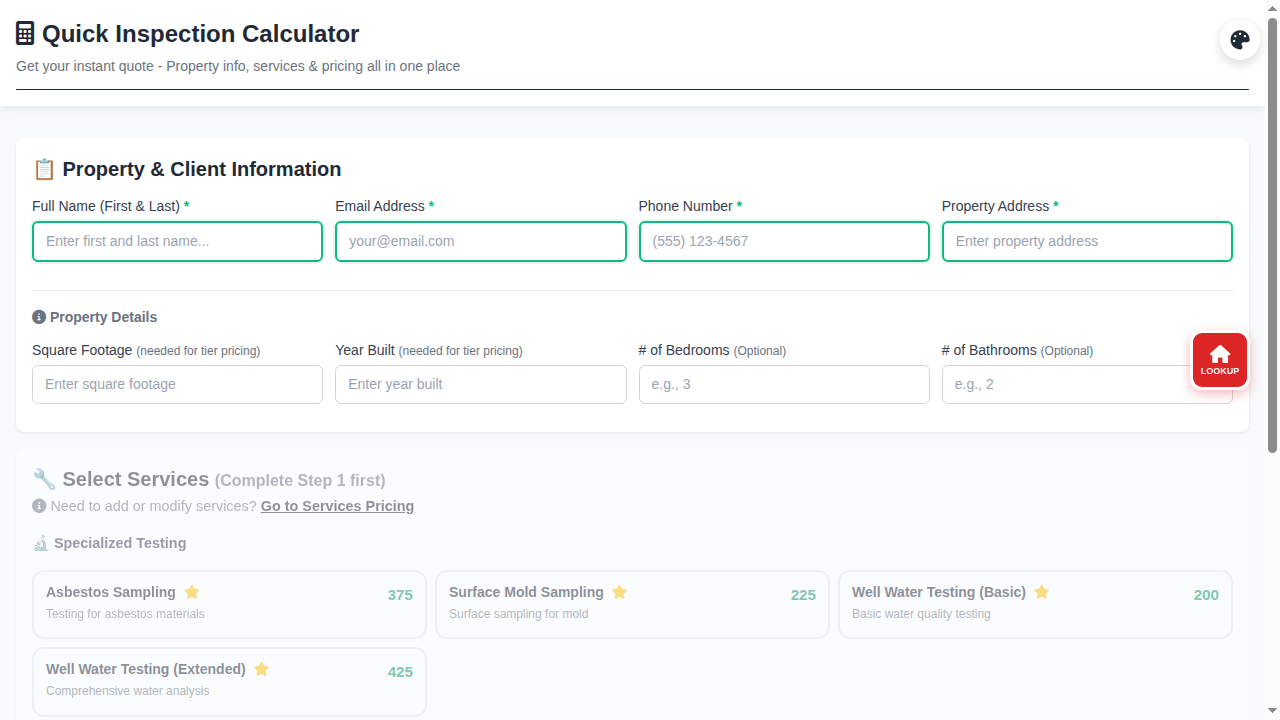
The single biggest difference between a 12-hour day and a 9-hour one is writing the report on a tablet while you walk the home. InspectorData's mobile app lets you snap photos, drop comments from an 8,000+ comment library, and build the report on-site — so you leave with it nearly done.
See the Mobile AppMidday: Report Writing & the Client Walkthrough
Near the end of each inspection, the buyer and their agent typically arrive for a walkthrough. This is where inspectors earn their referrals. You're not reciting every nail; you're calmly explaining what matters, what's normal wear, and what they should prioritize. A buyer who feels informed (not alarmed) tells their agent you were great — and that agent sends you their next ten clients.
Then comes the report — the inspector's actual product. It compiles every finding, photo, and recommendation into a clear, organized document the buyer and agent will rely on for negotiations. Done the old way, this is the most dreaded part of the day: hours hunched over a laptop reconstructing what you saw. Done with modern faster reporting workflows and AI assistance, most of it is finished before you leave the driveway.
Afternoon: The Second Job & Admin
A two-inspection day means a midday pivot to the next property. The second inspection often goes faster — you're warmed up, and you've learned to read homes quickly. Between and after jobs, the self-employed reality kicks in: confirming tomorrow's appointments, sending quotes to new leads before they call a competitor, processing payments, and answering the inevitable "can you explain finding #14?" email from an agent.
This administrative layer is invisible in job descriptions but very real. For a solo inspector, it can eat one to two hours a day. It's also the part that scales worst by hand and best with software — which is why the busiest inspectors automate scheduling, quoting, and follow-up rather than doing each by hand.

Evening: Delivery, Follow-Up & Marketing
The day ends with delivery and relationships. You send the finished report, the buyer and agent get instant access, and you close the loop: a thank-you to the agent, a polite request for a review, a note to follow up on that quote you sent this morning. Reviews and agent goodwill are the fuel of a referral business — ten minutes here compounds into next month's bookings. Our guides on becoming the go-to inspector for realtors and marketing your inspection business cover this engine in depth.
How the Day Changes by Season
One thing job descriptions never mention: the work has a rhythm. Spring and summer are peak real estate season — back-to-back inspections, long days, and the chance to bank income. Late fall and winter slow down in many markets, which is when smart inspectors catch up on continuing education, refresh their marketing, and add new services. Weather shapes the day too: you inspect roofs in the rain, attics in summer heat, and crawlspaces year-round. It's outdoor, all-conditions work, and many inspectors love it for exactly that reason.
The Pros and Cons, Honestly
No career profile is worth much if it only lists the upside. Here's the balanced view from people who do this every day.
| What Inspectors Love | What's Genuinely Hard |
|---|---|
| Schedule flexibility — you control your calendar | Report writing is the most time-consuming task |
| Independence — be your own boss | Income is irregular while building a client base |
| Variety — every home is a new puzzle | Weather exposure and physical demands |
| Active, outdoors, never stuck at a desk all day | Liability pressure — you must be thorough |
| Strong income with low overhead | Constant marketing to keep referrals flowing |
| Helping people make a huge decision wisely | The occasional difficult client or contested finding |
Notice that several of the "hard" items — report writing time, scheduling churn, follow-up — are exactly the things the right tools shrink. The physical and weather realities are inherent to the job; the administrative drag is mostly a choice.
Is This Career a Fit for You?
The people who thrive as home inspectors tend to share a few traits. You're detail-oriented and methodical — you don't cut corners. You're comfortable explaining technical things in plain language to nervous buyers. You're physically capable of ladders, attics, and crawlspaces. You're self-motivated, because nobody hands a self-employed inspector their next job. And you're comfortable running a small business, or willing to learn. If that sounds like you, the path in is more accessible than most realize — start with our certification guide and the full guide to starting a home inspection business.
What the Day Earns You
So what does a day like this pay? It depends on your market and how many inspections you complete, but the math is appealing because overhead is so low. A productive two-inspection day, repeated consistently, supports a strong full-time income — and because you're self-employed, add-on services and efficient reporting raise your effective hourly rate substantially.
| Experience Level | Typical Annual Income | Common Day |
|---|---|---|
| Entry-level (0–2 yrs) | $35,000 – $55,000 | Building a book; 1 inspection most days |
| Established (2–5 yrs) | $55,000 – $85,000 | 1–2 inspections daily, steady referrals |
| Senior / busy solo (5–10 yrs) | $75,000 – $120,000+ | 2–3 inspections, premium pricing, add-ons |
| Business owner (10+ yrs) | $100,000 – $200,000+ | Schedules a team; sells the company's brand |
For the full picture — hourly rates, per-inspection economics, and a state-by-state breakdown — see our salary & income guide and income by state guide. And if you want to know what it costs to get started, our startup cost breakdown has every line item.
Want Your Day to Look Like This — Without the 7 p.m. Report Marathon?
The inspectors with the best days run their whole business on one platform: AI-assisted reports written on-site, online scheduling, instant quoting, a client CRM, agreements, and payments at 2.99%. Start your inspection business on InspectorData — $79/month introductory with a 90-day free trial, no credit card.
Start Your 90-Day Free TrialFrequently Asked Questions
What does a home inspector do all day?
A home inspector's day mixes field work and desk work. A common pattern is one to three on-site inspections, each taking two to four hours, plus report writing, client and agent communication, scheduling, and travel between properties. On-site, the inspector visually examines the roof, exterior, structure, foundation, attic, electrical, plumbing, HVAC, insulation, and major appliances, documenting findings with photos. Afterward they write and deliver a detailed report. A solo inspector also handles their own marketing, booking, and invoicing between jobs.
How many inspections does a home inspector do per day?
Most full-time inspectors perform one to three inspections per day. A single average home takes two to four hours on-site plus one to two hours of report writing, so two inspections is a full, productive day for many solo inspectors. Larger or older homes, and ancillary services like radon or sewer scope, reduce how many you can fit in. Inspectors who use efficient mobile reporting software complete reports faster and can responsibly take on more inspections per week.
Is being a home inspector physically demanding?
It is moderately physical. A typical inspection involves climbing ladders onto roofs, crawling through attics and crawlspaces, walking the full property, kneeling, and carrying equipment. It is far less strenuous than most construction trades but more active than a desk job. Reasonable fitness and comfort with heights and tight spaces help. Many inspectors work into their 60s and beyond because the physical demand is manageable and the schedule is flexible.
What are the best and worst parts of being a home inspector?
Inspectors most often cite the best parts as schedule flexibility, working independently, variety, being outdoors and active, and strong earning potential with low overhead. The most common downsides are report writing time, weather exposure, irregular income while building a client base, the pressure of liability, and the constant marketing required to keep a referral pipeline full. Efficient software reduces the report-writing and scheduling burden significantly.
What time does a home inspector start work?
Most inspections are scheduled in the morning, often starting between 8 and 10 a.m., because real estate transactions and buyer schedules favor daytime appointments and morning light is best for exterior and roof inspection. A solo inspector usually starts the workday earlier with prep and ends it later with report writing, but one major appeal of the career is the ability to set your own schedule.
Do home inspectors work weekends?
Some do, by choice. Because real estate is busiest around weekends, inspectors who offer Saturday appointments can capture more bookings and stand out to agents. Many inspectors keep weekdays as their core schedule and add weekend availability seasonally or to win referral relationships. The flexibility to decide is one of the career's biggest draws.
Thinking About Becoming a Home Inspector?
When you're ready to start, InspectorData runs your whole business — AI-powered reports, scheduling, instant quoting, a client CRM, agreements, and payments at 2.99%. $79/month introductory with a 90-day free trial, no credit card.
Start Your Free Trial