- 1 The Marketing Foundation (Before Anything Else)
- 2 Local SEO: The Highest-ROI Free Channel
- 3 Reviews: The Conversion Multiplier
- 4 Referral Marketing: The #1 Volume Driver
- 5 Content Marketing for Long-Term Authority
- 6 Social Media That Actually Works
- 7 Paid Advertising: When and How
- 8 Setting Your Marketing Budget
Home inspector marketing is different from most local service businesses — because the purchase decision often involves three parties (buyer, agent, and the inspector's reputation) rather than just one. Understanding how clients actually find and choose inspectors is the foundation of effective marketing in 2026.
The Marketing Foundation (Before Anything Else)
Before spending money on any marketing channel, ensure these foundations are in place. Without them, all other marketing underperforms:
| Foundation Element | What It Does | Priority |
|---|---|---|
| Online booking on your website | Converts traffic to bookings without phone calls | Critical |
| Google Business Profile (optimized) | Appears in local map searches | Critical |
| 50+ Google reviews (4.8+ stars) | Converts searchers who find you | Critical |
| Professional website with clear pricing | Eliminates doubt, captures bookings | High |
| Mobile-optimized experience | 60%+ of searches happen on mobile | High |
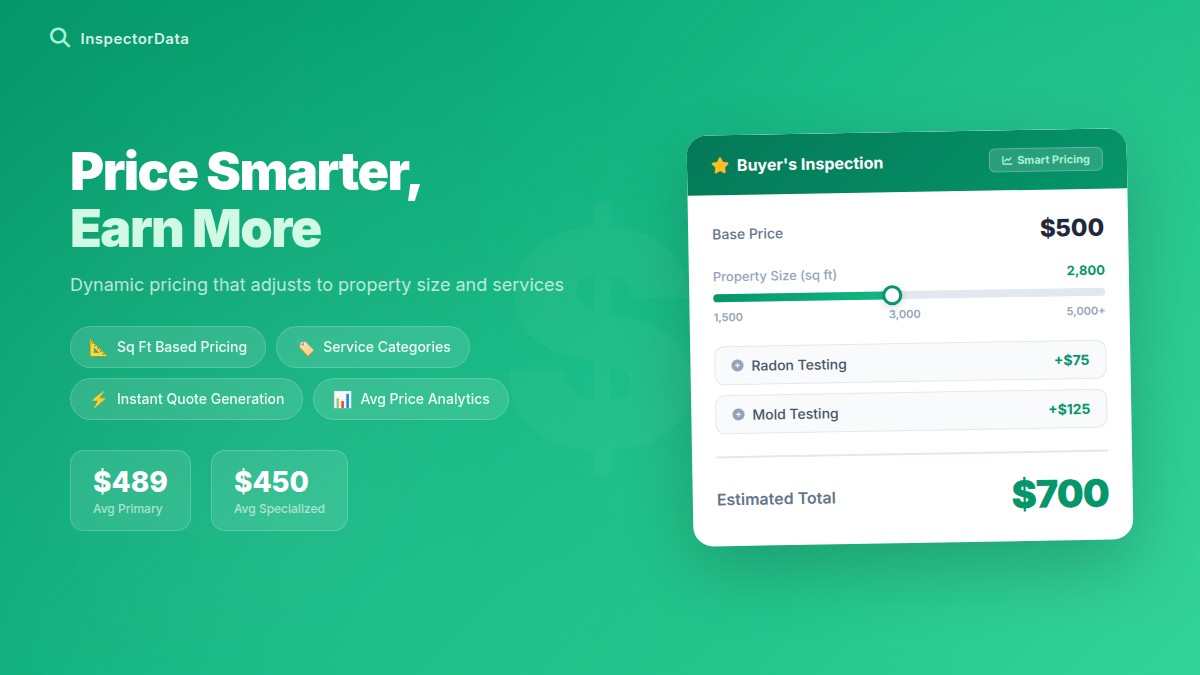
| Instant quote calculator | Reduces friction from "curious" to "booked" | High |
Local SEO: The Highest-ROI Free Channel
When someone in your city searches "home inspector [city]" or "home inspection near me," appearing in the top 3 results (the Google Map Pack) generates free, high-intent traffic indefinitely. This is the most cost-effective marketing investment a home inspector can make.
SEO Priority Actions
- Complete every field of your Google Business Profile
- Add your business to 20+ local directories (Yelp, Angi, HomeAdvisor, etc.) with consistent NAP (Name, Address, Phone)
- Generate a consistent flow of new Google reviews (review velocity matters)
- Create service-area pages on your website for each city you serve
- Build local backlinks from real estate blogs, neighborhood news sites, and business associations
See the complete local SEO guide for home inspectors for the full setup checklist and strategy.
Reviews: The Conversion Multiplier
Reviews don't just build trust — they directly multiply the value of every other marketing investment. An inspector with 200 reviews gets 3–4x the bookings from the same Google ranking as an inspector with 15 reviews, because reviews determine click-through rate and conversion rate simultaneously.
Review targets by growth stage:
| Stage | Google Review Goal | Expected Booking Conversion |
|---|---|---|
| New (Year 1) | 50+ reviews | 5 – 8% |
| Growing (Year 2) | 100+ reviews | 10 – 15% |
| Established (Year 3+) | 200+ reviews | 15 – 22% |
See the complete Google reviews guide for the automated review request system that gets 30–45% of clients to leave reviews.
Referral Marketing: The #1 Volume Driver
For most inspectors, 55–65% of their business comes from agent referrals. This isn't a marketing channel — it's the marketing channel. Everything else should be viewed as supplementary to referral development.
Agent Referral Priority Actions
- Identify the 20 most active buyer's agents in your market (search Zillow, Realtor.com, local MLS)
- Find warm introductions through title companies, mortgage lenders, or mutual contacts
- Deliver same-day reports — this is the single highest-impact differentiator for agents
- Send a monthly value email to your agent list (market stats, home maintenance tips, inspection insights)
- Attend brokerage meetings to meet 20–30 agents in a single morning
Read the complete realtor referral guide for the full relationship-building playbook.
Content Marketing for Long-Term Authority
Content marketing — primarily blog posts and educational videos — builds organic search traffic and establishes expertise that compounds over time. Unlike paid ads that stop the moment you stop paying, a well-written blog post about "radon testing in [city]" generates traffic for years.
Content Topics That Drive Inspector Traffic
| Content Type | Example Topics | Traffic Potential |
|---|---|---|
| Home buying guides | "What to Expect During a Home Inspection" | Very High |
| Home maintenance | "Fall Home Maintenance Checklist for [City] Homeowners" | High |
| Common defects | "10 Most Common Issues Found in [City] Homes" | High |
| Service explanations | "Do I Need a Radon Test? [City] Radon Levels Explained" | Medium-High |
| Market-specific | "Home Inspection for [Neighborhood Name] Historic Homes" | Medium |
Social Media That Actually Works for Inspectors
Social media for inspectors is about education and trust-building, not direct sales. The formats that work best:
Educational Short Videos (Instagram Reels, TikTok, YouTube Shorts)
60–90 second videos showing common defects you find on inspections. "Here's what I found at today's inspection" content performs extremely well because it's educational, relatable to home buyers, and demonstrates expertise without being promotional. Inspectors who post 3–5 of these videos per week see consistent growth in local follower counts and direct booking inquiries.
Before/After Photos (Instagram, Facebook)
Show a finding, explain what it means, and note what needs to be done. This content educates potential clients about the value of inspections without a single sales pitch.
What to Skip
Skip LinkedIn (wrong audience for B2C inspection marketing), Twitter/X (low local intent), and Pinterest (not your audience). Focus your limited time on Instagram and Facebook — platforms where homebuyers actually spend time.
Paid Advertising: When and How
Paid ads are appropriate for inspectors who:
- Already have a strong online booking and review system in place (so paid traffic converts)
- Want to accelerate growth in a specific market or season
- Have tested their conversion rate and know what a lead is worth
Paid Channel Comparison for Inspectors
| Channel | Best For | Monthly Budget | Expected Return |
|---|---|---|---|
| Google Search Ads | Capturing active searchers | $500 – $1,500 | 5–15 bookings/month |
| Google Local Services Ads | Local map placement | $400 – $1,200 | 4–12 bookings/month |
| Facebook/Instagram Ads | Awareness in specific zip codes | $300 – $800 | 2–8 bookings/month |
| Angi/HomeAdvisor Ads | High-intent buyer leads | $200 – $600 | 3–10 bookings/month |
Google Search Ads targeting "[city] home inspector" and related terms delivers the highest-intent traffic of any paid channel. Start there if you're going to run paid ads at all.
Setting Your Marketing Budget
| Business Stage | Annual Revenue | Marketing Budget (%) | Budget ($) | Priority Spend |
|---|---|---|---|---|
| Startup | $0 – $80,000 | 10 – 15% | $0 – $12,000 | GBP, website, referral relationship time |
| Growing | $80,000 – $200,000 | 6 – 10% | $4,800 – $20,000 | SEO, reviews, limited paid ads |
| Established | $200,000 – $500,000 | 4 – 7% | $8,000 – $35,000 | Paid ads, content, social media |
| Multi-inspector | $500,000+ | 3 – 5% | $15,000 – $25,000+ | Brand, content, targeted paid |
The Platform That Supports Every Marketing Channel
InspectorData's instant quote calculator captures website visitors. The automated review system builds your Google reputation. The booking system converts traffic from every channel into confirmed appointments. The analytics dashboard shows which marketing sources generate the most revenue. All in one platform. Try it free for 30 days.
Try InspectorData Free for 30 Days