Sewer scope, radon, and mold inspections are the three most common add-ons to a standard home inspection. A sewer scope typically runs $150 to $300, radon testing $125 to $250, and mold testing with lab analysis $300 to $650. This guide breaks down each add-on's cost, what it includes, when it is worth getting, and how bundling them with a home inspection saves money.
Quick Answer
A sewer scope inspection costs about $150 to $300, radon testing costs $125 to $250, and a mold inspection with lab analysis costs $300 to $650. Each is priced separately from the standard home inspection, and bundling them on the same visit is the cheapest way to get the ones your property needs.
Add-On Inspection Cost Overview
A standard home inspection covers the home's major systems, but it does not include specialized testing of the sewer line, radon levels, or mold. These are offered as separate add-on services because they require different equipment, lab work, or expertise. Here is how the three most common add-ons compare at a glance.
| Add-On | Typical Cost | What It Detects | Best For |
|---|---|---|---|
| Sewer Scope | $150 - $300 | Root intrusion, cracks, bellies, blockages | Homes 20+ years old |
| Radon Testing | $125 - $250 | Elevated radon gas levels | Radon-prone areas, homes with basements |
| Mold Inspection | $300 - $650 | Mold growth and elevated spore counts | Homes with moisture or visible mold |
Sewer Scope Inspection Cost
A sewer scope inspection uses a specialized camera fed through the home's main sewer line to inspect the interior of the pipe all the way to the municipal connection or septic tank. It is one of the highest-value add-ons because sewer line repairs are among the most expensive surprises a new homeowner can face.
Typical cost: $150 to $300, with most homeowners paying around $200. The price depends on the length and accessibility of the line and whether it is bundled with a home inspection.
What a Sewer Scope Detects
- Root intrusion — tree roots growing into pipe joints, a leading cause of blockages.
- Cracks and breaks in clay, cast-iron, or older pipe materials.
- Bellies (low spots) where waste and water collect and cause recurring backups.
- Blockages and buildup that restrict flow.
- Offsets and separations at pipe joints.
When to Get a Sewer Scope
A sewer scope is strongly recommended for any home more than 20 years old, homes with mature trees near the sewer line, and any property where you want to rule out a costly hidden problem before buying. Replacing a damaged sewer line can run into the thousands, so a roughly $200 inspection that catches it early is excellent insurance.
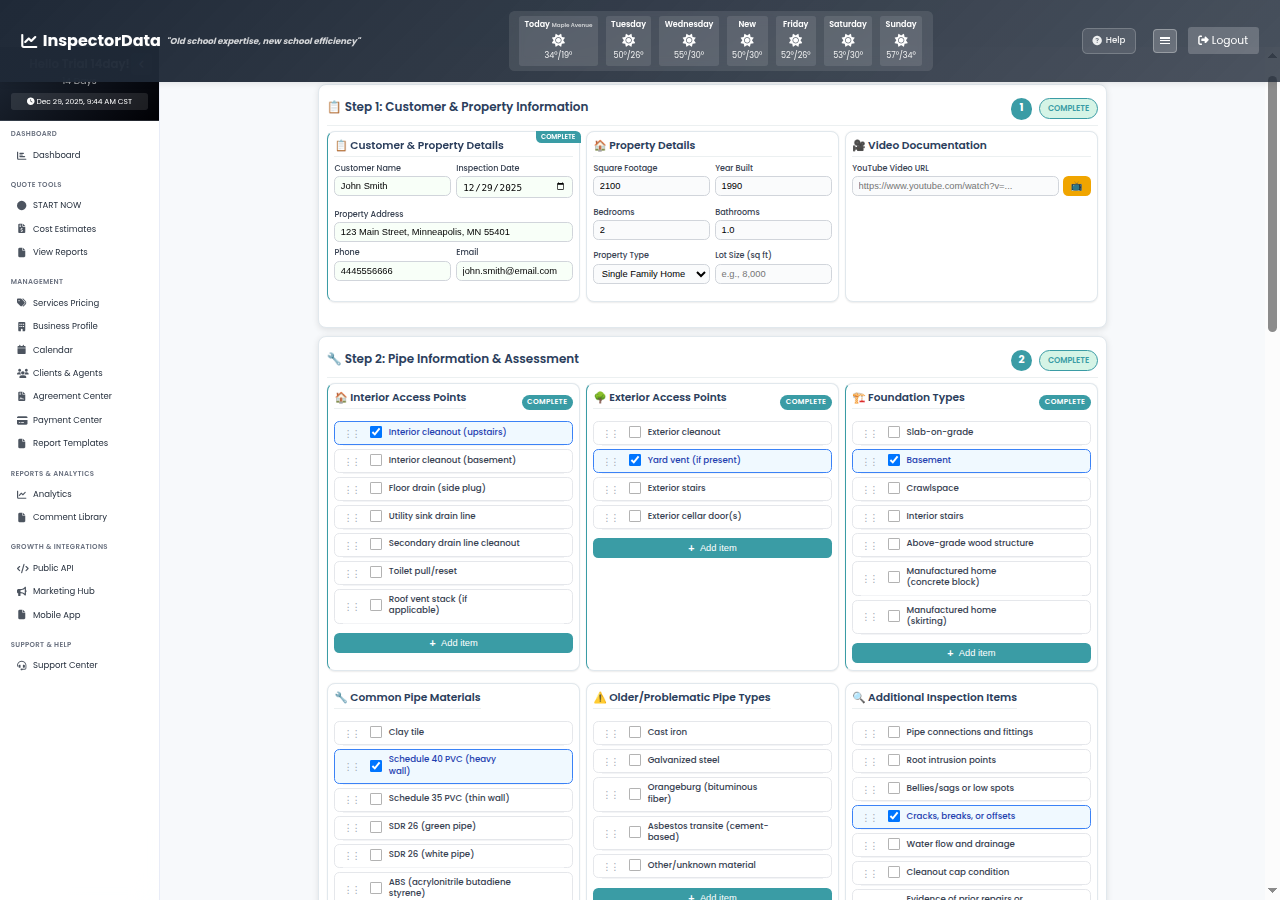
Inspectors: Deliver Pro Sewer Scope Reports
Capture video, annotate findings, and deliver a clean sewer scope report your clients and their agents understand at a glance — all inside InspectorData.
See Sewer Scope ReportsRadon Testing Cost
Radon is a naturally occurring radioactive gas that seeps up from the soil into homes. It is colorless and odorless, and it is the leading cause of lung cancer among non-smokers. Because you cannot detect it without testing, radon testing is a low-cost, high-value add-on in most of the country.
Typical cost: $125 to $250 for a standard short-term test. Continuous radon monitors, which provide hour-by-hour data and are harder to tamper with, sit at the higher end of the range.
How Radon Testing Works
- Short-term test (2-7 days) — the most common option during a real estate transaction; a device measures radon levels over a few days in the lowest livable level of the home.
- Continuous radon monitor — an electronic device that logs readings continuously and resists interference, often preferred for transactions.
- Long-term test — measures over 90 days or more for the most accurate annual average, typically used outside of a purchase timeline.
When to Test for Radon
Radon testing is recommended in most regions, and especially in radon-prone areas and homes with basements or slab-on-grade construction. If a test comes back elevated, radon mitigation systems are widely available and effective. For a deeper look at the process, see our radon testing and home inspection guide.
Mold Inspection Cost
A mold inspection assesses a home for mold growth and, when sampling is included, measures airborne spore counts via laboratory analysis. Mold matters both for health (it can trigger respiratory issues) and for the property (it signals moisture problems that may indicate hidden water damage).
Typical cost: $300 to $650 with lab analysis, depending on how many air or surface samples are collected and the lab turnaround. A basic visual mold assessment without lab testing costs less.
What a Mold Inspection Includes
- Visual assessment of areas prone to moisture — basements, crawl spaces, bathrooms, attics, and around plumbing.
- Moisture readings to identify damp areas that support mold growth.
- Air sampling compared against an outdoor baseline to detect elevated spore counts.
- Surface sampling of suspected growth for lab identification.
- Lab report identifying mold types and concentrations.
When to Get a Mold Inspection
A mold inspection is most worthwhile when there is visible mold, a persistent musty odor, or a history of water intrusion, flooding, or plumbing leaks. If you have any of these signals, testing helps you understand the scope of the problem before you buy or remediate. Our mold inspection guide for homebuyers covers the process in more detail.

Which Add-Ons Do You Actually Need?
You do not need every add-on on every home. Match the inspection to the property's characteristics and your concerns:
| If the home... | Consider... |
|---|---|
| Is more than 20 years old or has big trees near the line | Sewer scope |
| Is in a radon-prone area or has a basement | Radon testing |
| Has visible mold, musty odor, or past water damage | Mold inspection |
| Is on a private well | Well water testing (separate add-on) |
| Is in a termite-prone region | Termite / wood-destroying insect inspection |
When in doubt, ask your inspector. An experienced inspector who knows your local housing stock can tell you which add-ons make sense for the specific property you are buying.
Bundling to Save Money
The single best way to control add-on costs is to bundle them with your standard home inspection. Because the inspector is already on site, each additional service avoids a separate trip charge. Many inspectors offer package pricing that is noticeably cheaper than booking each service individually.
Are Add-On Inspections Worth the Cost?
For the right property, each add-on is a small expense relative to the risk it addresses:
- A sewer scope costing around $200 can reveal a damaged line that would cost thousands to dig up and replace — knowledge you can use to negotiate or walk away.
- Radon testing costs a little over $100 but protects your family from a leading cause of lung cancer, and identifies a problem that has an affordable, effective fix.
- A mold inspection can confirm whether a musty smell is a minor nuisance or a sign of hidden water damage and structural risk.
Add-on inspections are not upsells for their own sake — each one targets a specific, expensive risk that a standard inspection does not cover. The trick is choosing the ones that fit the property.
For Inspectors: Pricing and Selling Add-Ons
Add-on services are where many inspectors find their best margin. The trip is already paid for by the base inspection, so each add-on is largely incremental revenue. The challenge is making them easy to choose and easy to pay for.
Build Add-Ons Into the Booking
The most effective approach is to let clients select add-ons at the moment they book, with clear pricing for each and an obvious bundle discount. When the sewer scope and radon test are checkboxes on the booking page, attach rates climb without any sales pressure.
Collect Payment On Site
Add-ons turn a $400 inspection into a $700 ticket — but only if you actually collect. On-site payment with simple processing means the larger ticket lands in your account the same day instead of sitting in an unpaid invoice.
Frequently Asked Questions
How much does a sewer scope inspection cost in 2026?
A sewer scope inspection typically costs $150 to $300, with most homeowners paying around $200. The inspector runs a camera through the sewer line to check for root intrusion, cracks, bellies, and blockages. It is most valuable on homes over 20 years old, where a hidden sewer line problem can cost thousands to repair.
How much does radon testing cost?
Radon testing typically costs $125 to $250 for a standard short-term test, with continuous radon monitors at the higher end. Radon is a naturally occurring radioactive gas and the leading cause of lung cancer among non-smokers, so testing is recommended in most regions, especially in radon-prone areas and for homes with basements.
How much does a mold inspection cost?
A mold inspection with lab analysis typically costs $300 to $650, depending on how many air or surface samples are taken and the lab turnaround. A basic visual mold assessment without lab testing costs less. Mold testing is most useful when there is visible mold, a musty odor, or a history of water intrusion.
Are sewer scope, radon, and mold inspections worth the cost?
For the right property, yes. A sewer scope on an older home can reveal a problem that costs thousands to dig up and replace. Radon testing protects your family's health and is inexpensive relative to mitigation. Mold testing is worthwhile when there is evidence of moisture or visible growth. Each add-on costs a small fraction of the repair or health risk it can identify.
Can I bundle add-on inspections with a home inspection?
Yes, and it usually saves money. Because the inspector is already on site, adding a sewer scope, radon test, or mold assessment to a standard home inspection typically costs less than scheduling each one as a separate visit. Ask your inspector about package pricing for the add-ons your property needs.
When should I get a sewer scope inspection?
A sewer scope is strongly recommended for homes more than 20 years old, homes with large trees near the sewer line (root intrusion risk), and any home where you want to rule out an expensive hidden sewer problem before buying. Older clay or cast-iron sewer lines are especially prone to cracking, bellying, and root damage.
Inspectors: Bill Add-Ons, Get Paid On Site
Sewer scope, radon, mold, and more — offer them in your quote calculator, bundle automatically, and collect payment on site with simple 2.99% processing. $79/month, 90-day free trial, no credit card required.
Start Your Free Trial