Hiring your first inspector is the moment your inspection business transforms from a job into a business. It's also one of the decisions most solo inspectors delay too long — turning down work, burning out, and plateauing at an income ceiling that a second inspector would break through. Here's how to know it's time and how to do it right.
The 5 Signals It's Time to Hire
| Signal | What It Means | Urgency |
|---|---|---|
| Turning down inspections | Demand exceeds your capacity — you're losing revenue weekly | High |
| Booked 2+ weeks out consistently | Agents are starting to go elsewhere for faster availability | High |
| Working 6–7 days per week | Unsustainable pace; quality or health will eventually break | High |
| Can't take vacation | Business depends entirely on your physical presence | Medium |
| Revenue has plateaued for 3+ months | You've hit your solo capacity ceiling | Medium |
If you're experiencing 2 or more of these signals consistently, you're past due for your first hire. Every week of delay is lost revenue and lost market position.
The Revenue Threshold: When the Math Works
Before hiring, confirm the math works. A second inspector needs to generate enough revenue to cover their compensation, your employer costs, and a profit margin that justifies the risk and management overhead.
| Scenario | 2nd Inspector Revenue (8 inspections/week) | Annual Inspector Cost | Net to Business |
|---|---|---|---|
| Conservative ($425 avg, 50% pay) | $176,800 | $88,400 | $88,400 |
| Typical ($475 avg, 45% pay) | $197,600 | $88,920 | $108,680 |
| Optimized ($525 avg, 40% pay) | $218,400 | $87,360 | $131,040 |
These numbers assume you can feed the second inspector a consistent flow of work — which requires the marketing and referral infrastructure already in place. The second inspector should be profitable from month 2 or 3 if you have steady demand. If you're turning down work today, you already have the demand.
Employee vs. Independent Contractor: Which is Right?
This is the most consequential decision you'll make in the hiring process. The IRS has clear criteria for whether a worker qualifies as an independent contractor, and misclassifying employees as contractors carries significant penalties.
| Factor | Points to Employee | Points to Contractor |
|---|---|---|
| Work schedule control | You set their hours | They choose when to work |
| Tools and equipment | You provide | They provide their own |
| Exclusive relationship | They only work for you | They work for multiple clients |
| Training and methods | You train and direct how | They use their own methods |
| Integration | Core part of your business | Project-based, separate |
Most multi-inspector firms structure new hires as W-2 employees — which gives you more control, protects you legally, and allows you to train for quality consistency. Consult a CPA or employment attorney to confirm the right structure for your situation.
How to Structure Compensation
Percentage-Based Pay (Most Common)
Pay the inspector 40–50% of the base inspection fee. This aligns incentives (both of you benefit from higher volume), is simple to calculate, and scales naturally. Add-on services can be handled at 30–40% to the inspector.
Hourly + Performance Bonus
Pay an hourly rate ($25–$35/hour) with a volume bonus (e.g., $50 for every inspection over 8 in a week). This provides income stability for the new hire while incentivizing volume.
Sample Compensation Structure
| Model | Example | Inspector Take at 8 Inspections/Week |
|---|---|---|
| 50% per inspection | $450 × 50% × 8/week | $93,600/year |
| 45% per inspection | $475 × 45% × 8/week | $88,920/year |
| Hourly + bonus | $30/hr × 50hr/week + bonuses | $78,000 + bonuses/year |
New inspectors in most markets earn $55,000–$75,000 in year one, though the range shifts considerably depending on where you operate — our home inspector income by state breakdown shows just how wide that spread is. Experienced inspectors with strong performance can earn $80,000–$100,000+ as employees of a multi-inspector firm; the full home inspector salary guide covers what drives those numbers.
Finding the Right Candidate
Where to Look
- InterNACHI and ASHI job boards: Active inspectors looking for positions post here regularly
- Indeed and LinkedIn: Good for candidates transitioning from construction or related trades
- Your own network: Contractors, tradespeople, and former real estate agents make excellent inspectors
- Your state inspector association: Often has a job board or can connect you with recent graduates of approved courses
What to Look For
- Strong technical background (construction, trades, engineering)
- Excellent communication skills (inspections are 50% client education)
- Detail-oriented and thorough by nature
- Reliable and punctual (late inspectors create cascading schedule problems)
- Coachable — not defensive about feedback
Onboarding Without Losing Quality
The biggest fear with hiring is that your new inspector will damage the reputation you've spent years building. This is a legitimate concern that's solved entirely through structured onboarding.
The 30-60-90-Day Onboarding Plan
| Period | Activity | Goal |
|---|---|---|
| Days 1–10 | Shadow you on 5–10 inspections | Learn your standards and method |
| Days 11–20 | Conduct inspections, you shadow | Identify gaps, provide real-time coaching |
| Days 21–30 | Solo inspections, you review all reports | Ensure report quality meets standard |
| Days 31–60 | Solo, spot-check 30% of reports | Build independence, maintain oversight |
| Days 61–90 | Full independence, monthly review | Consistent quality, growing volume |
Protecting Your Reputation After Hiring
Your reputation — built on reviews, referrals, and agent trust — is your most valuable asset. Protect it with these systems:
- Standardized report templates: Every inspector uses the same format and standards. No freelancing on report structure.
- Mandatory same-day delivery: This standard must apply to every inspector, not just you.
- Report review protocol: New inspectors have all reports reviewed for the first 30 days.
- Client feedback loop: Read every review. Review requests after every inspection reveal quality issues immediately.
- Error and omission debrief: When a complaint comes in, treat it as a learning opportunity for the entire team, not a crisis to suppress.
Manage a Multi-Inspector Team Without Extra Complexity
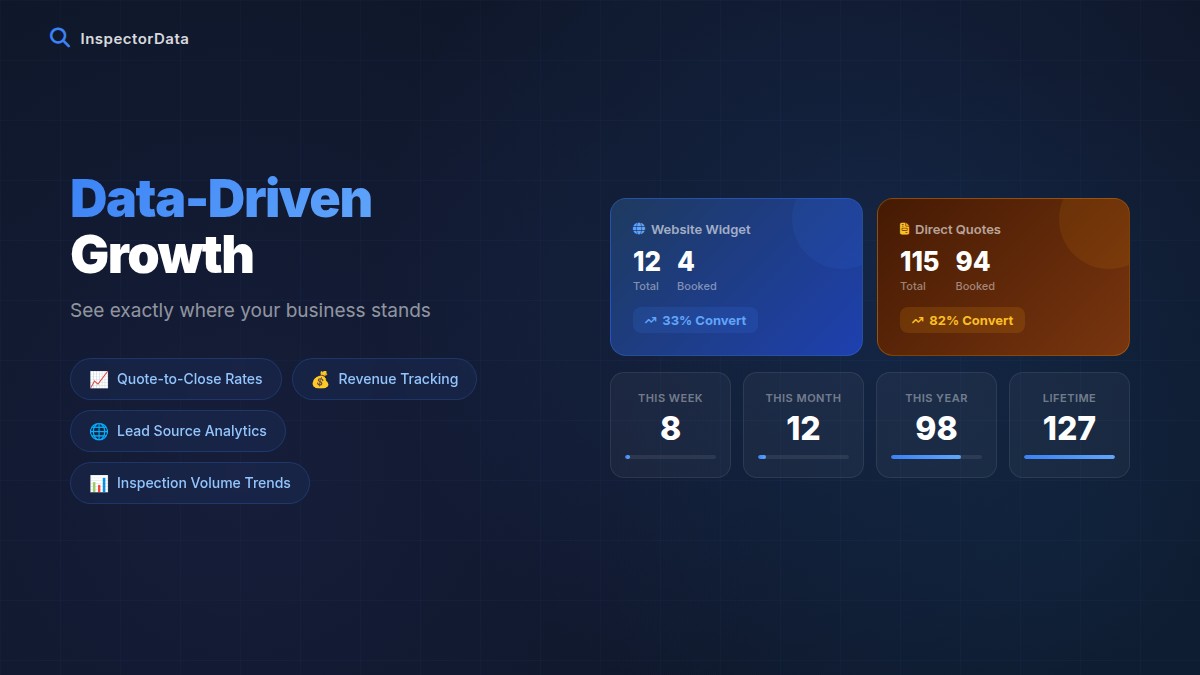
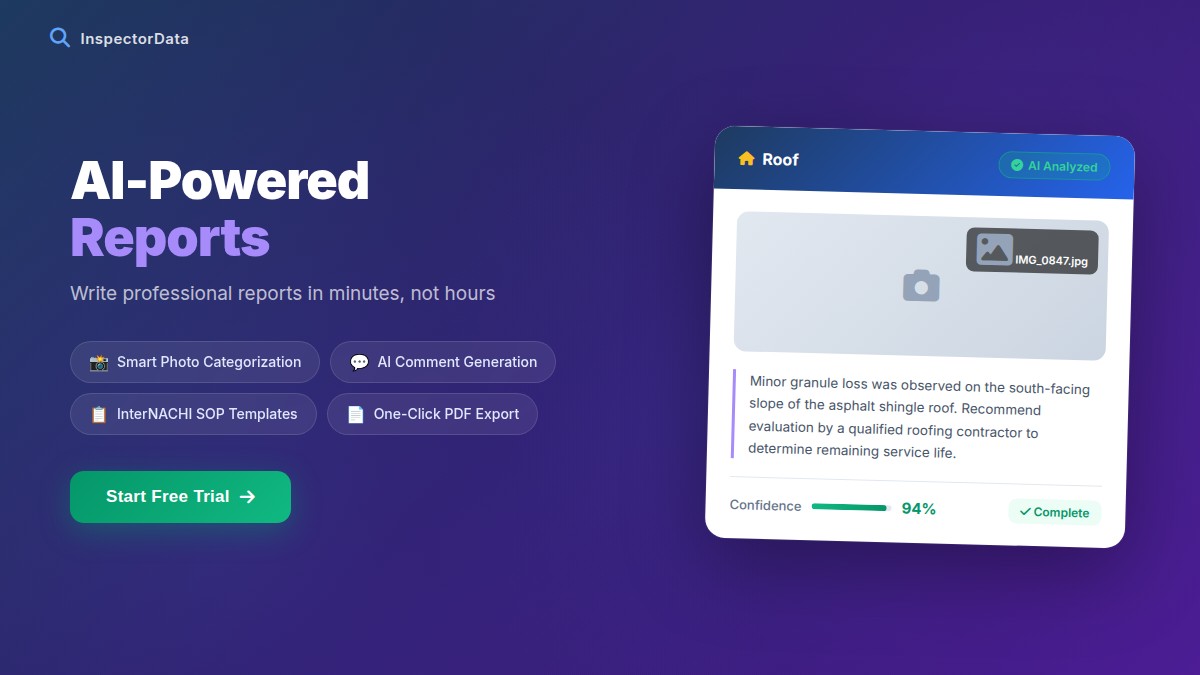
InspectorData's multi-user dashboard lets you assign inspections to any inspector, track all reports in one place, and maintain visibility across your entire team's calendar and performance. Scale from one inspector to ten without changing platforms. Try it free for 30 days.
Try InspectorData Free for 30 Days