Home inspection is a seasonal business in most of the country. The spring and summer peak can feel like controlled chaos — 15-hour days, back-to-back bookings, no weekends. Then November arrives, and the phone gets quiet. Inspectors who don't prepare for this cycle end up in financial stress every January. Inspectors who do prepare use slow months as a competitive advantage.
When the Slow Season Hits and Why
Understanding the seasonal pattern helps you plan around it rather than react to it:
| Season | Market Activity | Inspection Volume | Strategy |
|---|---|---|---|
| Spring (Mar – May) | Very High | Peak | Maximize volume, raise prices |
| Summer (Jun – Aug) | High | Peak – Near Peak | Volume + add-on upsell |
| Fall (Sep – Nov) | Moderate | Declining | Relationship investment, prep |
| Winter (Dec – Feb) | Low | Slow Season | Survival + strategic investment |
The slowdown is driven by reduced housing market activity — fewer listings, fewer buyers under contract, fewer inspections needed. This is structural, not a reflection of your marketing or quality.
Financial Preparation: The Essential Step
The inspectors who suffer most during slow months are those who spend their peak earnings on peak expenses. The solution is treating slow season income as a financial planning exercise:
The Slow Season Reserve System
| Action | When | Target Amount |
|---|---|---|
| Set up a dedicated savings account | Now | — |
| Transfer 15–20% of all peak earnings | Every month, May – October | 3 months of expenses |
| Set slow season budget (reduced expenses) | October | Cover fixed costs only |
| Draw from reserve as needed | November – February | Smooth income year-round |
An inspector earning $12,000/month in peak season saving 20% for 6 months accumulates $14,400 in reserve — enough to cover 2–3 slow months at reduced income without financial stress.
Maintaining Volume During Slow Months
Target Markets with Year-Round Activity
While the general market slows, certain buyer segments remain active year-round:
- Real estate investors: They buy regardless of season. One investor relationship can mean 2–5 inspections per month even in January.
- Corporate relocation buyers: Companies relocate employees year-round. Partner with relo-specialist agents.
- New construction buyers: Builder move-ins happen year-round. Phase inspections don't slow seasonally.
- Pre-listing sellers: Sellers preparing for spring listing often do pre-listing inspections in January and February.
Expand Your Geographic Territory
If your primary market slows, consider adding adjacent zip codes or suburbs that have different market timing. A 30-minute radius expansion during slow months can add 20–30% booking volume.
Adjust Pricing for Volume
Some inspectors offer a modest slow-season discount (5–10%) promoted to past clients as a "winter incentive." This generates repeat business and referrals during a slow period, at a small margin reduction. Never advertise this publicly — it becomes your new permanent price. Send it only to past clients and loyal agent partners via private email.
Use Slow Time to Build Relationships
The slow season is the best time to invest in agent relationships. Agents are also slow in winter, which means they have more time for coffee meetings, brokerage visits, and relationship building. The inspector who shows up with value during slow months earns referral priority when spring arrives.
Slow Season Relationship Actions
| Action | Time Investment | Relationship Value |
|---|---|---|
| Coffee or lunch with top 5 agents | 1–2 hours each | Very High |
| Attend brokerage meetings | 2 hours/meeting | High (new relationships) |
| Send agents a handwritten thank-you note | 15 minutes each | High (memorable) |
| Email a useful market or home tip to agent list | 1 hour per email | Medium (stay top-of-mind) |
| Sponsor a broker event or meeting lunch | $100 – $300 | High (visibility) |
See the complete guide to realtor referrals for the full relationship-building playbook.
Invest in the Business During Slow Months
Slow months are when smart inspectors build the infrastructure that makes peak season more profitable. Things you never have time for during peak season become achievable in January:

- Certifications: Get that CMI, radon certification, or mold inspector certification you've been putting off
- New equipment: Evaluate and purchase sewer scope camera, thermal camera, or upgraded moisture meters
- Website update: Refresh photos, add new services, update testimonials
- Software and systems: Set up or optimize your booking, reporting, and automation systems — if cost is a concern, explore the cheapest home inspection software options available
- Marketing content: Write blog posts, create educational videos, build email campaigns
- SOPs: Document your inspection process for future employees or consistency
Inspectors who use winter for business investment enter spring with capabilities and systems that their competitors — who spent winter waiting for the phone to ring — don't have.
Alternative Revenue Streams for Slow Season
Home Maintenance Inspections
Homeowners who aren't buying or selling still have homes that need attention. Market "annual home checkup" inspections to past clients in October/November. Position it as a fall/winter maintenance check before harsh weather. Charge $200–$350 for a streamlined 90-minute inspection without a full buyer inspection report.
Commercial Inspections
Commercial real estate doesn't slow down seasonally the same way residential does. Adding commercial inspection capabilities — even starting with small commercial properties — creates a revenue stream that operates independently of the residential market cycle. See the guide to increasing inspection revenue for more diversification strategies.
Teaching and Training
Experienced inspectors can generate income teaching inspector training courses, offering CE sessions for real estate agents, or mentoring apprentice inspectors. InterNACHI and ASHI both have educational programs that allow experienced inspectors to become instructors.
Build Systems That Work Year-Round
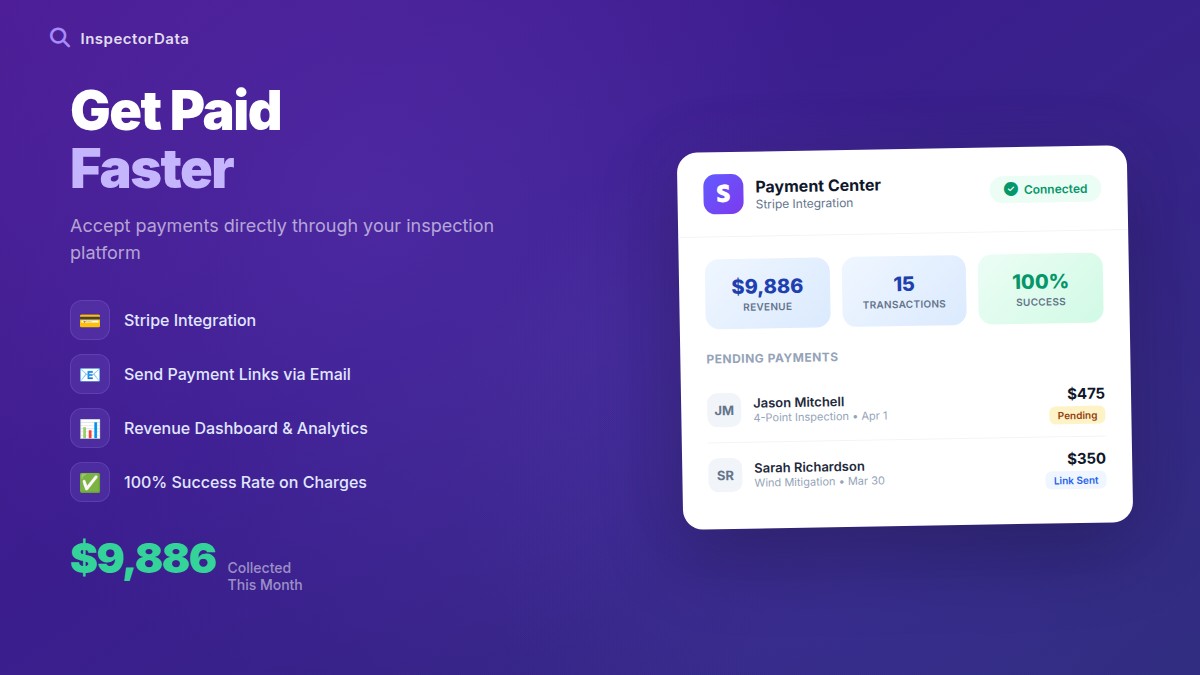
InspectorData's automated booking, marketing follow-up, and analytics tools keep your business working even when the market slows — capturing every available inspection and maintaining client relationships on autopilot. Try it free for 30 days.
Try InspectorData Free for 30 Days