- 1 What Is a Home Inspection?
- 2 Exterior & Structure
- 3 Roof & Attic
- 4 Plumbing Systems
- 5 Electrical Systems
- 6 HVAC & Climate Control
- 7 Interior Rooms
- 8 Kitchen & Bathrooms
- 9 Basement & Foundation
- 10 Garage & Exterior Structures
- 11 What Is NOT Included
- 12 What to Do After the Inspection
- 13 Frequently Asked Questions
Buying a home is likely the largest investment you will ever make. A professional home inspection is your opportunity to understand the true condition of the property before you commit. But what exactly does a home inspector look for? This comprehensive checklist covers every system and component a qualified inspector evaluates -- room by room, system by system.
Whether you are a first-time homebuyer preparing for your inspection or a homeowner wanting to evaluate your property before selling, this guide will help you understand the process and know what to expect. The checklist items below are based on standards of practice followed by professional inspectors across the United States, including InterNACHI (International Association of Certified Home Inspectors) and ASHI (American Society of Home Inspectors) guidelines.
Quick Answer
A home inspection covers roof, attic, structure, foundation, exterior, electrical, plumbing, HVAC, interior, insulation, ventilation, and built-in appliances. Inspectors follow standards of practice (like InterNACHI SOP) to evaluate each system systematically.
What Is a Home Inspection?
A home inspection is a non-invasive, visual examination of a residential property's accessible systems and components. A qualified inspector evaluates the condition of the home and identifies defects, safety hazards, and maintenance issues. The inspection typically takes 2 to 4 hours depending on the size, age, and condition of the property.
The inspector produces a written report -- usually delivered within 24 hours -- documenting findings with descriptions, photographs, and recommendations. Many inspectors now use automated inspection reports to ensure consistency and thoroughness. This report becomes a critical tool for negotiating repairs or price adjustments with the seller.
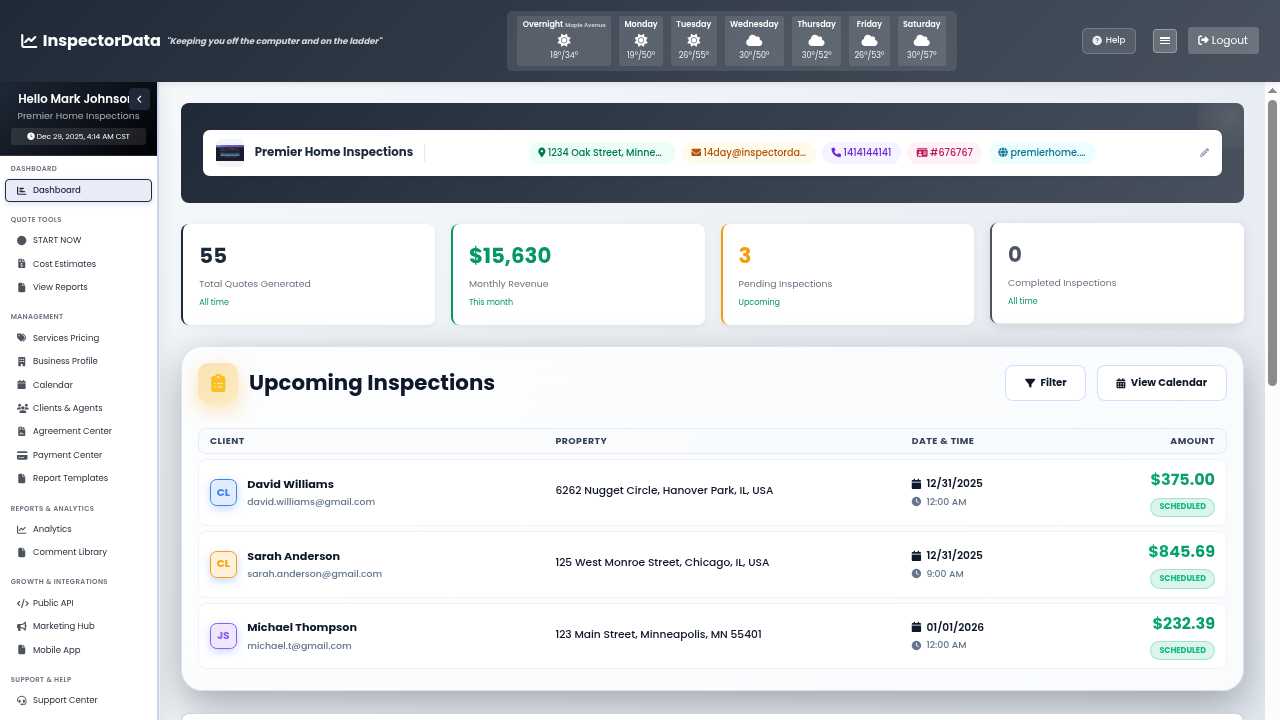
How Inspectors Document Findings
Modern inspectors use AI-powered software like InspectorData to photograph defects and instantly generate professional descriptions. Over 8,000 pre-written comments ensure nothing gets missed.
See How Reports Are MadeExterior & Structure
The exterior inspection is where your inspector begins building a picture of the home's overall condition. Issues found outside often indicate problems inside, so this phase sets the tone for the entire inspection.

Siding & Exterior Walls
- Siding condition -- Cracks, warping, rot, missing pieces, or loose sections in vinyl, wood, fiber cement, brick, or stucco
- Paint and finish -- Peeling, bubbling, or chalking paint that exposes underlying materials to weather damage
- Trim and fascia -- Deterioration, rot, or separation at trim boards, fascia, and soffits
- Caulking and sealant -- Failed or missing caulking around windows, doors, and penetrations where water can enter
- Weep holes -- Blocked or missing weep holes in brick veneer that prevent proper drainage
Grading & Drainage
- Ground slope -- Soil should slope away from the foundation at a minimum of 6 inches in the first 10 feet to direct water away from the home
- Gutter system -- Gutters and downspouts should be intact, properly attached, and directing water at least 4 feet from the foundation
- Standing water -- Evidence of ponding water near the foundation, which can lead to basement leaks and structural damage
- Window wells -- Clear of debris with functioning drains to prevent basement water intrusion
Driveways, Walkways & Patios
- Surface condition -- Significant cracks, heaving, or settling in concrete, asphalt, or paver surfaces
- Trip hazards -- Uneven sections creating differences of half an inch or more that present a safety hazard
- Deck and porch condition -- Structural integrity of support posts, beams, joists, and ledger board attachment to the home
- Railing safety -- Decks and porches more than 30 inches above grade should have railings with balusters spaced no more than 4 inches apart
Roof & Attic
The roof is one of the most expensive components to replace, so inspectors pay close attention to its condition. A roof replacement can cost $8,000 to $25,000 or more depending on size and material, making this section of the inspection particularly important for buyers.
Roof Covering
- Shingle condition -- Curling, buckling, missing, or worn shingles that indicate aging or storm damage
- Estimated remaining life -- Based on material type, current condition, and visible wear patterns
- Flashing -- Metal or rubberized material at roof penetrations (chimneys, vents, skylights) and valleys must be intact to prevent leaks
- Roof penetrations -- Plumbing vents, exhaust fans, and pipe boots should be properly sealed
- Moss and algae -- Growth that can trap moisture and accelerate shingle deterioration
- Number of layers -- Most building codes allow a maximum of two layers of shingles; additional layers require a complete tear-off
Attic Space
- Insulation -- Type, depth, and condition of insulation affecting energy efficiency (recommended R-38 to R-60 in most climates)
- Ventilation -- Adequate soffit, ridge, or gable vents to prevent moisture buildup and ice dams
- Structural members -- Rafters, trusses, and sheathing checked for sagging, cracking, or improper modifications
- Water stains -- Evidence of past or active roof leaks on sheathing or insulation
- Bathroom exhaust routing -- Exhaust fans should vent to the exterior, not into the attic space where moisture causes mold
Plumbing Systems
Plumbing problems range from minor annoyances to major expenses. Inspectors evaluate both the supply (water coming in) and drain/waste/vent (water going out) systems throughout the home.
Water Supply
- Pipe material -- Copper, PEX, CPVC, or galvanized steel (galvanized pipes in older homes are a concern due to corrosion and restricted flow)
- Water pressure -- Tested at fixtures; should be between 40 and 80 psi for normal operation
- Main shutoff valve -- Location and operability of the main water shutoff
- Visible leaks -- Active dripping, water stains, or corrosion at fittings and connections
- Polybutylene pipes -- A specific concern in homes built between 1978 and 1995; this pipe material is known for premature failure
Drain, Waste & Vent
- Drain function -- All sinks, tubs, and showers tested for proper drainage speed
- Toilets -- Flushing, fill, and base seal tested; checked for leaks at the wax ring
- Sewer line condition -- Visible portions inspected; a separate sewer scope inspection is recommended for older homes
- Vent pipes -- Proper venting prevents sewer gases from entering the home and ensures drains function correctly
Water Heater
- Age and condition -- Most tank water heaters last 8 to 12 years; the inspector checks the manufacture date
- Temperature and pressure relief (TPR) valve -- A critical safety device that must be present and properly piped to within 6 inches of the floor
- Combustion air -- Gas water heaters need adequate ventilation to operate safely
- Flue and venting -- Gas water heater exhaust must be properly routed to the exterior
- Seismic strapping -- Required in earthquake-prone regions to prevent tipping
Electrical Systems
Electrical defects are among the most serious findings in a home inspection because they present fire and shock hazards. Inspectors evaluate the electrical system from the service entrance to individual outlets.

Service Panel
- Panel capacity -- Most modern homes need 200-amp service; older homes with 100-amp or less may need upgrading
- Panel brand -- Certain panel brands (Federal Pacific, Zinsco) have documented safety issues and may require replacement
- Breaker condition -- Properly sized breakers, no double-tapped connections, no evidence of overheating or corrosion
- Grounding and bonding -- Proper grounding electrode and bonding of the panel to plumbing and gas piping
- Labeling -- Circuits should be clearly labeled for safety and convenience
Wiring
- Wire type -- Copper is standard; aluminum wiring (common in 1960s-1970s homes) requires special connections and monitoring
- Knob-and-tube wiring -- Found in pre-1950 homes; may be a safety and insurance concern
- Junction boxes -- All connections should be enclosed in covered junction boxes
- Visible damage -- Frayed insulation, exposed conductors, or improper splices
Outlets & Switches
- GFCI protection -- Ground Fault Circuit Interrupter outlets required in kitchens, bathrooms, garages, outdoors, and near water sources
- AFCI protection -- Arc Fault Circuit Interrupter protection required in bedrooms and living areas in newer construction
- Grounding -- Three-prong outlets should be properly grounded; ungrounded outlets are a safety concern
- Reversed polarity -- Hot and neutral wires connected to the wrong terminals, creating a potential shock hazard
- Smoke and CO detectors -- Location, type, and age of detectors throughout the home
HVAC & Climate Control
Heating and cooling systems represent significant replacement costs -- $5,000 to $15,000 or more for a complete HVAC system. Understanding the current condition helps buyers budget for future expenses.
Heating System
- System type and age -- Furnace, boiler, or heat pump; most last 15 to 25 years depending on maintenance
- Operation test -- Inspector runs the system and checks for proper operation, unusual noises, and temperature differential
- Heat exchanger -- In gas furnaces, a cracked heat exchanger can leak carbon monoxide and is a serious safety hazard
- Filter condition -- A dirty filter restricts airflow and reduces efficiency; also indicates maintenance habits
- Flue and venting -- Gas and oil systems must properly vent combustion gases to the exterior
- Distribution -- Ductwork or piping checked for obvious issues, disconnections, or inadequate insulation
Cooling System
- System type and age -- Central air conditioning, heat pump, or ductless mini-splits; typical lifespan is 12 to 20 years
- Operation test -- Temperature differential between supply and return air should be 15 to 20 degrees
- Refrigerant lines -- Insulation condition on the suction line; signs of leaks at connections
- Condenser unit -- Outdoor unit checked for debris, fin damage, level installation, and adequate clearance
- Condensate drainage -- Drain line and overflow pan should be clear and properly routed
Set Your Pricing, Get More Bookings
InspectorData's instant quote calculator lets homebuyers get a price and book online. Inspectors customize rates by property size, age, and add-on services.
See the Quote CalculatorInterior Rooms
The interior inspection covers every accessible room in the home. Inspectors evaluate the condition of finishes, structural elements, and installed systems in each space.
Walls, Ceilings & Floors
- Cracks -- Hairline cracks are typically cosmetic; wide cracks, stair-step cracks in drywall, or cracks that have been repeatedly patched may indicate structural movement
- Water stains -- Discoloration on ceilings or walls indicating past or active leaks from plumbing or the roof above
- Floor condition -- Sloping, bouncing, or soft spots that may indicate structural issues with the subfloor or framing below
- Mold indicators -- Visible mold growth, musty odors, or conditions conducive to mold (moisture intrusion, poor ventilation)
Windows & Doors
- Operation -- Windows and doors should open, close, and latch properly; difficulty may indicate settling or framing issues
- Glass condition -- Cracked, fogged, or broken seals in double-pane windows (fogging indicates failed thermal seal)
- Weather stripping -- Worn or missing seals that affect energy efficiency
- Safety glazing -- Tempered or safety glass required near doors, in bathrooms, and in certain window locations
- Egress windows -- Bedrooms must have at least one window large enough for emergency escape (minimum 5.7 square feet of opening)
Stairs & Railings
- Handrails -- Required on both sides of stairs with four or more risers; must be graspable (1.25 to 2 inches diameter)
- Baluster spacing -- No more than 4 inches apart to prevent children from getting through
- Riser and tread consistency -- Variations greater than 3/8 inch between steps are a trip hazard
- Headroom -- Minimum 6 feet 8 inches of clearance above the stair nosing
Kitchen & Bathrooms
Kitchens and bathrooms have the highest concentration of plumbing, electrical, and ventilation components in the home, making them particularly important during the inspection.
Kitchen Checklist
- Appliances -- Range/oven, dishwasher, garbage disposal, and range hood tested for basic function (refrigerators and microwave ovens are typically excluded)
- Countertop and cabinet condition -- Water damage, delamination, or structural issues
- Sink and faucet -- Leaks under the sink, proper drain function, spray attachment operation
- GFCI outlets -- Required within 6 feet of the kitchen sink; all countertop outlets should be GFCI-protected
- Ventilation -- Range hood should vent to the exterior (recirculating models are less effective but common)
- Gas connections -- If applicable, gas supply line and shutoff valve for the range checked for leaks
Bathroom Checklist
- Exhaust fan -- Present and vented to the exterior (not into the attic); tested for operation
- Toilet -- Stable mounting, proper flush, no base leaks, caulked at the floor
- Tub and shower -- Caulking and grout condition; water damage at tile transitions; drain function; faucet operation
- GFCI outlets -- Required in all bathroom outlets regardless of distance from water
- Water damage indicators -- Soft flooring near toilets or tubs, peeling paint, discolored caulking, or mold growth
- Hot water at fixtures -- Maximum recommended temperature of 120 degrees Fahrenheit to prevent scalding
Basement & Foundation
The foundation is literally what the entire house sits on. Structural issues here can be the most expensive problems to address, with repair costs ranging from a few hundred dollars for minor cracks to $20,000 or more for serious settling or failure.
Foundation
- Foundation type -- Poured concrete, concrete block, stone, pier and beam, or slab-on-grade; each has specific issues to monitor
- Cracks -- Vertical cracks are common and usually minor; horizontal cracks, stair-step cracks in block, or cracks wider than 1/4 inch are more concerning
- Bowing or bulging walls -- Inward movement of foundation walls typically caused by soil pressure and requires engineering evaluation
- Evidence of repair -- Previous patching, wall anchors, carbon fiber reinforcement, or other repair indicators
- Settlement -- Uneven floors, sticking doors, and diagonal cracks in drywall can indicate foundation movement
Basement
- Moisture and water intrusion -- Water stains, efflorescence (white mineral deposits), active seepage, or dampness
- Sump pump -- If present, tested for operation; discharge should route water away from the foundation
- Structural supports -- Columns, beams, and joists checked for proper support, sagging, rot, or insect damage
- Radon -- While not part of a standard inspection, radon testing is strongly recommended in areas with known radon risk
- Insulation and vapor barriers -- Crawl spaces should have ground cover and may need insulation depending on climate
Garage & Exterior Structures
Garage
- Vehicle door operation -- Manual and automatic opener function; auto-reverse safety test (the door must reverse when it contacts an object)
- Photo-eye sensors -- Required safety sensors that prevent the door from closing on people or objects
- Fire separation -- Wall and ceiling between garage and living space should be properly fire-rated (typically 1/2-inch or 5/8-inch drywall, depending on location)
- Fire-rated door -- Door from garage to living space should be fire-rated, self-closing, and not have a pet door or other modification
- Floor slope -- Garage floor should slope toward the garage door for drainage; cracks and settling noted
- Electrical -- GFCI outlets required in the garage; light fixtures and wiring condition
What Is NOT Included in a Standard Home Inspection
Understanding the limits of a standard inspection is just as important as knowing what is covered. The following items are typically outside the scope of a general home inspection:
- Sewer scope / sewer line camera inspection -- Requires specialized equipment; highly recommended as a separate service for homes over 20 years old
- Mold testing -- Inspectors note conditions conducive to mold but lab testing is a separate service
- Radon testing -- A separate test requiring 48+ hours of monitoring; recommended in regions with known radon risk
- Pest / termite / wood-destroying insect inspection -- Typically performed by a licensed pest control company; often required by lenders
- Asbestos, lead paint, or environmental testing -- Requires specialized testing and is outside the standard scope
- Well and septic testing -- Separate inspections required for homes with private water and sewage systems
- Pool and spa inspection -- Usually a separate specialty inspection
- Concealed areas -- Behind walls, under carpet, or other areas that cannot be visually accessed without destructive testing
- Cosmetic conditions -- Paint color, scratches, dents, or other purely cosmetic issues are not defects
What to Do After the Inspection
Once you receive your inspection report, here is how to make the most of it:
- Read the full report carefully. Do not just skim the summary -- review each finding and look at the photographs. The context matters.
- Prioritize safety issues. Electrical hazards, structural concerns, active water intrusion, and gas leaks should be addressed before closing or immediately after.
- Separate major defects from maintenance items. A missing outlet cover is a $2 fix. A failed roof is a $15,000 problem. Focus negotiations on items that materially affect the value or safety of the home.
- Get estimates for significant repairs. Use the inspection report to get quotes from licensed contractors for major items. This gives you concrete numbers for negotiations.
- Negotiate with the seller. You can request repairs, a price reduction, or a credit at closing. Your agent can advise on the best strategy for your market.
- Keep the report for future reference. The inspection report is a valuable document for planning maintenance and understanding your home's systems, even after you close on the property.
A thorough home inspection gives you the knowledge to make a confident buying decision. Whether the report reveals minor maintenance items or significant defects, the information puts you in control of the process. To understand which findings carry the most weight, see our guide to what fails a home inspection.
Frequently Asked Questions
What does a home inspector check?
A standard home inspection covers the roof and attic, exterior and structure, foundation and basement or crawlspace, plumbing, electrical, HVAC, interior rooms, kitchen and bathrooms, and the garage. The inspector evaluates the condition and operation of every readily accessible major system and component and documents defects, safety hazards, and maintenance items in a written report with photos.
How long does a home inspection take?
Most home inspections take two to four hours depending on the size, age, and condition of the property. A small condo may take under two hours, while a large or older single-family home with outbuildings can take four hours or more. Buyers are encouraged to attend so the inspector can explain findings in person. See our home inspection cost guide for typical pricing.
What is not included in a standard home inspection?
A standard inspection is visual and non-invasive, so it excludes anything behind walls or buried, code compliance, and specialty testing. Common exclusions are mold, radon, asbestos, lead paint, pests/termites, septic systems, wells, sewer scope, pools and spas, and chimney interiors. These are usually offered as separate ancillary inspections.
Should I use a home inspection checklist as a buyer?
Yes. A checklist helps you do a quick walkthrough before making an offer and helps you understand and prioritize your inspector's report afterward. It is not a substitute for a professional inspection, which requires training, tools such as moisture meters and combustion analyzers, and experience to interpret findings correctly.
Do I need to be present for the home inspection?
You are not required to attend, but it is strongly recommended. Being present lets you see issues firsthand, ask questions, and learn how your future home's systems work. If you cannot attend the whole inspection, try to join for the final 30-45 minutes when the inspector summarizes findings.
Inspectors: Never Miss a Checklist Item Again
InspectorData includes AI-powered photo analysis and 8,000+ pre-written comments that ensure every system gets documented. Start your 30-day free trial today.
Start Your Free Trial