A typical residential inspection pays $400–$600. A small commercial inspection pays $1,500–$3,500. A large commercial property inspection pays $5,000–$15,000. The skill set overlap is significant — but the income potential difference is enormous. Here's how home inspectors successfully add commercial work without abandoning what's already working.
Commercial vs. Residential: Key Differences
| Factor | Residential | Commercial |
|---|---|---|
| Average fee | $400 – $600 | $1,500 – $10,000+ |
| Inspection duration | 2 – 4 hours | 4 – 16+ hours |
| Report standard | InterNACHI/ASHI SOP | ASTM E2018 Property Condition Assessment |
| Client type | Individual buyers | Businesses, investors, lenders |
| Decision maker | Buyer + agent | Business owner + attorney + lender |
| Seasonal variability | High | Low (commercial RE is year-round) |
| Client volume per relationship | 1 per buyer | Many per investor/lender |
| Competition level | Very High | Low-Medium |
Commercial inspections are less competitive than residential because fewer inspectors are trained and positioned for commercial work. This means less price pressure, better margins, and longer-term client relationships with repeat buyers.
Commercial Inspection Income Potential
| Commercial Property Type | Typical Fee Range | Inspection Time |
|---|---|---|
| Small retail/office (under 5,000 sq ft) | $1,200 – $2,500 | 4 – 6 hours |
| Mid-size commercial (5,000 – 20,000 sq ft) | $2,500 – $5,000 | 6 – 12 hours |
| Large commercial (20,000 – 100,000 sq ft) | $5,000 – $15,000 | 1 – 3 days |
| Apartment complex (10–50 units) | $2,000 – $8,000 | 6 – 16 hours |
| Restaurant/food service | $1,500 – $3,500 | 4 – 8 hours |
| Warehouse/industrial | $2,000 – $6,000 | 4 – 12 hours |
Revenue Scenario: Adding 2 Commercial Inspections Per Month
| Scenario | Monthly Commercial Revenue | Annual Addition |
|---|---|---|
| 2 small commercial at $1,800 each | $3,600 | $43,200 |
| 2 mid-size commercial at $3,000 each | $6,000 | $72,000 |
| Mixed commercial at $2,500 average | $5,000 | $60,000 |
Certifications and Training
Commercial inspection is a separate discipline from residential. The following certification and training paths prepare you for commercial work:
| Certification | Issuer | What It Covers | Cost |
|---|---|---|---|
| Certified Commercial Property Inspector (CCPI) | CCPIA | PCA methodology, ASTM E2018, commercial systems | $400 – $700 |
| Commercial Inspector Training | InterNACHI | Commercial inspection fundamentals | Included with membership |
| Property Condition Assessment (PCA) Training | Various | ASTM E2018 compliance, lender requirements | $300 – $600 |
The ASTM E2018 standard governs Property Condition Assessments (PCAs) — the format required by most lenders when financing commercial real estate. Learning this standard is essential for commercial inspection work.
Types of Commercial Inspections
Property Condition Assessments (PCAs)
The most common commercial inspection type. Required by lenders for commercial financing. Follows ASTM E2018 standard. Produces a detailed report covering structural, mechanical, electrical, plumbing, and site conditions — plus a cost estimate for deferred maintenance.
Pre-Purchase Commercial Inspections
Buyers of commercial real estate — especially small investors and first-time commercial buyers — need inspections before closing. Less formal than a lender-required PCA, but still follows commercial standards.
Apartment Complex Inspections
Multi-family property inspections are a natural bridge between residential and commercial. An inspector experienced with residential single-family homes can apply those skills to apartment inspections — just at greater scale and with commercial-format reporting.
Small Business/Retail Lease Inspections
Business owners signing commercial leases want to know the condition of the space before committing. This is a growing niche with almost no competition in most markets.
Finding Commercial Inspection Clients
Commercial Real Estate Agents
Build relationships with commercial real estate agents the same way you build relationships with residential agents — provide consistent value, deliver professional reports on time, and make them look good to their clients. One commercial agent relationship can mean 6–12 commercial inspections per year.

Commercial Lenders
Banks, credit unions, and SBA lenders that finance commercial real estate need PCAs for every commercial loan. Getting on a lender's approved inspector list can generate 2–5 commercial inspections per month from a single lender relationship.
Real Estate Attorneys
Commercial real estate attorneys regularly refer clients to commercial inspectors. A 30-minute coffee meeting with one commercial real estate attorney can generate a steady flow of referrals over years.
Business Brokers
Business brokers handle the sale of businesses — including their underlying real estate. Many buyer-side clients of business brokers need property condition assessments as part of due diligence.
How to Price Commercial Inspections
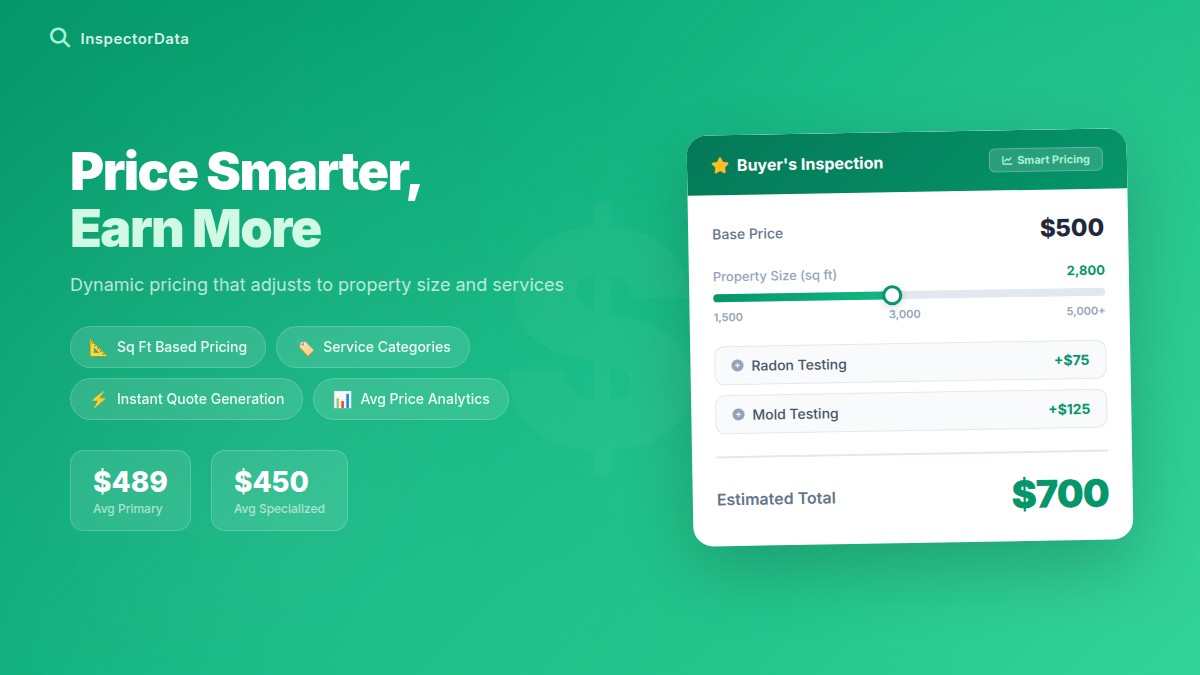
Commercial inspection pricing is typically based on square footage plus complexity factors:
| Pricing Method | Formula | Example |
|---|---|---|
| Square footage based | $0.08 – $0.15 per sq ft (minimum $1,200) | 10,000 sq ft × $0.12 = $1,200 |
| Flat rate by type | Set rates by property category | Restaurant = $2,500; Office = $1,800 |
| Time-based | $150 – $250/hour + report time | 8 hours @ $175 = $1,400 + report |
Add premiums for:
- ASTM E2018 PCA format required: +$300 – $600
- Rush turnaround (under 72 hours): +25%
- Specialized systems (elevators, commercial kitchen, etc.): +$200 – $500
- Travel beyond 30 miles: per-mile rate
Starting Small: The Right Entry Point
The best entry point for residential inspectors transitioning to commercial is small commercial properties — under 5,000 square feet. Small retail spaces, professional offices, small restaurants, and small warehouses use the same basic systems you already understand (HVAC, electrical, plumbing, roofing, structure) just in a commercial context.
The Recommended Transition Path
| Phase | Timeline | Activity |
|---|---|---|
| 1. Training | Month 1–2 | Complete CCPI or InterNACHI commercial training, study ASTM E2018 |
| 2. First inspections | Month 2–3 | Accept small commercial at reduced fee, build experience |
| 3. Market to commercial agents | Month 3–6 | Meet commercial RE agents, position for their referrals |
| 4. Lender relationships | Month 6–12 | Get on lender approved lists for PCA work |
| 5. Full commercial service | Month 12+ | Market confidently, charge full commercial rates |
Commercial inspection adds income without adding hours at a favorable rate — and creates a revenue stream that doesn't slow down seasonally the same way residential does. Combined with a strong residential base, it's one of the most powerful income diversification strategies available to inspectors. See the complete revenue growth guide for how commercial fits into the overall income strategy.
Manage Commercial and Residential Inspections in One Place
InspectorData's platform handles both residential and commercial inspection workflows — scheduling, quotes, report delivery, agreements, and payments — without separate tools for each. Scale into commercial without adding operational complexity. Try it free for 30 days.
Try InspectorData Free for 30 Days