Most home inspectors are excellent at inspecting homes. Most are terrible at marketing their business. The gap between a $60K inspector and a $150K inspector is rarely technical skill — it's systems, relationships, and visibility.
This guide covers the exact marketing playbook that drives consistent bookings: Google reviews, agent relationships, report branding, and the referral system that compounds over time.
1. Google Business Profile: Your #1 Free Marketing Asset
If you do nothing else from this guide, do this: claim, complete, and actively manage your Google Business Profile. It's free, it's where buyers search for inspectors, and a well-optimized profile with strong reviews wins more bookings than any paid ad.
Setup checklist:
- Claim your profile at business.google.com
- Add your service area (not just your city — include surrounding counties)
- List every service: general inspection, radon, mold, sewer scope, commercial, new construction
- Upload 10+ photos: you in the field, your equipment, sample report pages, your truck
- Add your website, phone number, and online booking link
- Write a description that includes your certifications and years of experience
- Set your hours and enable messaging
"Home inspector near me" is searched thousands of times per month in every metro market. Google's local pack (the 3 businesses shown at the top of results) captures 70%+ of those clicks. Reviews and profile completeness are the two biggest ranking factors.
Ongoing management (takes 5 minutes/week):
- Post a Google Post weekly — a tip, a recent find, a seasonal reminder
- Respond to every review within 24 hours (especially negative ones — handled well, they build more trust than silence)
- Answer any questions submitted through the profile
- Add new photos monthly
2. The 5-Star Review System
Reviews are the single most powerful trust signal for inspection clients. A profile with 50 reviews at 4.9 stars beats a competitor with 5 reviews at 5.0 every time — volume signals consistency.
The ask: Most inspectors don't get reviews because they don't ask. The simple fix:
- At the end of every inspection walkthrough, say: "If you felt I was thorough today, I'd really appreciate a Google review — it helps my small business a lot."
- Send an automated follow-up email 24 hours after report delivery with a direct review link
- Include the review link in your report delivery email footer
Go to your Google Business Profile → Get more reviews → Copy the short URL. That link takes clients directly to the review box — no searching required. Put it everywhere: email signature, report footer, follow-up texts.
Handling negative reviews: Respond professionally, acknowledge their concern, and offer to make it right offline. Never argue. A calm, professional response to a 1-star review often impresses potential clients more than the review hurts you.
Goal: 2 new reviews per week. At that pace you'll have 100 reviews within a year — enough to dominate most local markets.
3. Building Agent Relationships That Last
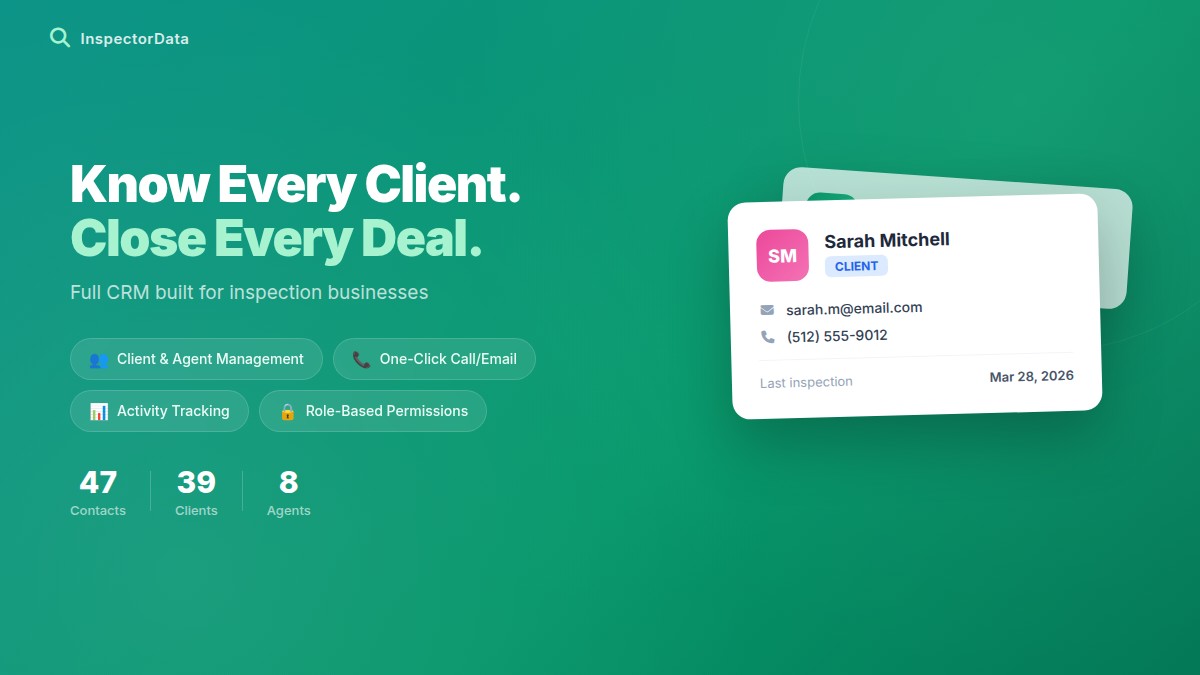
Real estate agents are the highest-leverage relationship in the inspection business. One agent who does 30 transactions per year and recommends you to every buyer = 30 guaranteed inspections. Nail 10 agent relationships and you'll never cold-call again.
How to get on an agent's list:
- Introduce yourself at open houses — agents hold opens every weekend. Bring cards, be brief, focus on what you offer their clients (fast turnaround, same-day reports, detailed documentation)
- Deliver reports fast — agents care more about turnaround than almost anything else. A report delivered the same day as the inspection makes their job easier and gets you recommended again
- Never embarrass an agent's deal unnecessarily — this doesn't mean hiding defects. It means communicating professionally, separating safety issues from maintenance items, and not catastrophizing a 1970s house to a first-time buyer
- Send a quarterly email with a useful tip — not a sales pitch. Something they can forward to clients: seasonal home prep checklist, "5 things buyers miss," local market insight
- Remember details — agents are busy. If you remember that their office just moved or that they specialize in condos, they'll remember you
Never let an agent relationship compromise your objectivity. An inspector who softens reports to protect deals gets referrals short-term and a destroyed reputation long-term. Your independence is your value — professional agents respect that and refer you because of it, not despite it.
4. Your Report Is Your Best Marketing
Every report you deliver is seen by the buyer, their agent, the seller's agent, the seller, and often family members. That's 5–8 people viewing your work from a single inspection. A polished, professional report silently markets your business every time it's shared.
What a premium report includes:
- Your logo and branding on every page
- Clear, professional photos with annotations
- Severity ratings that help buyers prioritize
- Plain-language descriptions (not jargon)
- A summary section at the front — busy agents and buyers read this first
- Your contact information and credentials on the cover page
- Delivered as a clean PDF, not a printed document or raw Word file
Inspectors who say "my reports speak for themselves" — the good ones mean it. Your report is read by people deciding whether to recommend you. Make it look like you charge $500+.
5. Website Essentials for Inspectors
Your website needs to do one job: convert a visitor into a booked inspection. Everything else is noise.
Must-haves:
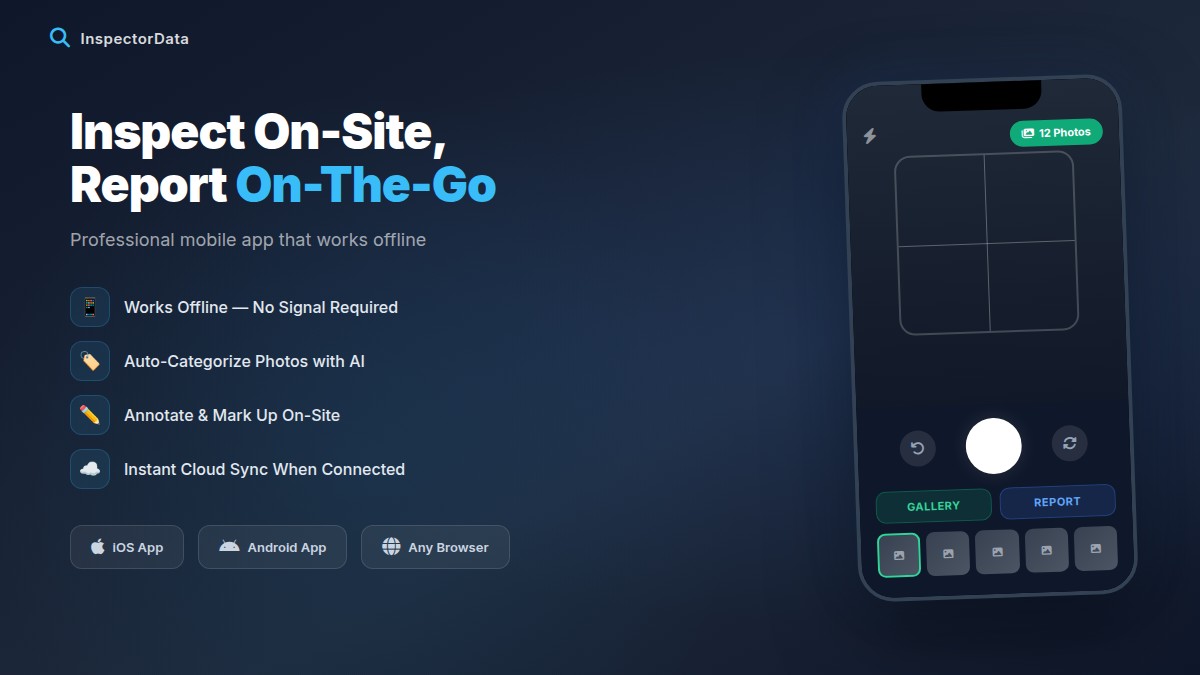
- Online booking — clients should be able to book without calling. Every hour without this is missed revenue from evening/weekend shoppers
- Instant quote calculator — publish your pricing. Buyers want to know the cost before they call. A calculator converts more leads than "contact us for a quote"
- Your certifications prominently displayed — InterNACHI, ASHI, state license number
- Sample report — let buyers see what they're getting before they book
- Google review widget — pull your live rating directly onto your homepage
- Service area map — be explicit about where you work
- Phone number in the header — not everyone books online; make it easy to call
6. Social Media That Actually Works for Inspectors
Most inspector social media is wasted effort because it targets the wrong audience with the wrong content. Here's what actually works:
Facebook: Best for local community groups and homeowner audiences. Share tips, seasonal reminders, and "what I found this week" posts. Join local neighborhood groups (with permission) and be genuinely helpful.
Instagram: Photo-heavy platform is perfect for inspection finds. "Before and after" shots, interesting defects, attic photos. Hashtags like #homeinspection, #homebuying, #realestate reach buyers actively searching.
X (Twitter): Good for connecting with the real estate community — agents, buyers, industry professionals. Short tips, data points, and engagement posts build an audience over time.
LinkedIn: Best for B2B — connecting with real estate agents, property managers, and commercial clients. Post case studies and professional insights.
"Found a live wire in the attic with no junction box cover — this is why you don't skip the inspection" with a photo gets 10x more engagement than any promotional post. Document your findings. The interesting ones spread.
7. Building a Referral Machine
The best marketing is a client who sends you their friends and family. Here's how to systematize it:
- Follow up 30 days after closing — a brief email: "Hope the move went smoothly! If you know anyone buying a home, I'd be honored if you thought of me." Simple, personal, effective.
- Thank referrers — when someone sends you a referral, acknowledge it. A handwritten card or small gift goes a long way. People refer to people who appreciate it.
- Stay top of mind — send a brief annual email in spring (inspection season) to past clients. Seasonal home maintenance tip + a reminder you're still in business.
- Build a referral network with complementary professionals — real estate attorneys, mortgage brokers, moving companies, contractors. These people see buyers constantly and can send you warm referrals.
8. The First-Year Growth Plan
If you're just starting out, here's the sequence that builds momentum fastest:
The Business Tools to Back Your Marketing
Marketing brings people to your door. InspectorData closes them: instant online quotes, seamless booking, same-day report delivery, and professional agreements. Give agents and clients a reason to keep coming back.
Try Free for 30 Days