- 1 Becoming a Home Inspector: The Short Version
- 2 Step 1: Check Your State's Requirements
- 3 Step 2: Complete Home Inspector Training
- 4 Step 3: Pass the NHIE (or State) Exam
- 5 Step 4: Get Licensed and Insured
- 6 Step 5: Buy Your Tools and Software
- 7 Step 6: Join an Association and Certify
- 8 Step 7: Land Your First Inspections
- 9 Total Cost & Timeline Breakdown
- 10 Frequently Asked Questions
You can become a working home inspector in roughly three to six months for an investment of about $400 to $3,000 — no college degree required. The path is the same in most states: complete an approved training program, pass the National Home Inspector Examination (or your state's equivalent), apply for a license where one is required, carry insurance, and start booking inspections. This step-by-step guide walks through exactly what to do, in what order, and what each step costs in 2026.
Quick Answer
To become a home inspector: (1) check your state's licensing rules, (2) complete an approved training program (a few weeks to a few months), (3) pass the NHIE or state exam, (4) apply for a license and buy insurance, (5) get tools and inspection software, (6) join an association like InterNACHI or ASHI, and (7) market to real estate agents for your first jobs. Total time: 3-6 months. Total cost: roughly $400-$3,000.

Becoming a Home Inspector: The Short Version
Home inspection is one of the most accessible skilled careers in the country. Unlike paths that demand a four-year degree and years of student debt, you can qualify to inspect homes in months. That low barrier to entry is exactly why so many people from the trades — contractors, electricians, HVAC techs, builders — as well as career-changers from completely unrelated fields move into inspection every year.
The opportunity is real. In 2025, approximately 5.5 million existing homes were sold in the United States, and the vast majority of those transactions involved an inspection. New construction, pre-listing inspections, and investor due-diligence add millions more. The U.S. Bureau of Labor Statistics, which classifies home inspectors under construction and building inspectors, reports a median annual salary of approximately $67,700, and demand for inspectors is projected to grow 5-7% through 2030 — faster than the average occupation. For the full earnings picture, see our home inspector salary and income guide.
The rest of this guide is the practical roadmap. Here are the seven steps, then the detail on each.
| Step | What It Involves | Typical Time | Typical Cost |
|---|---|---|---|
| 1. Check requirements | Confirm your state's licensing rules | 1 day | Free |
| 2. Training | Approved course, 40-200 hours | 3-12 weeks | $400-$1,500 |
| 3. Exam | NHIE or state exam | 1-4 weeks to schedule | ~$225 |
| 4. License & insurance | Apply for license, buy E&O + liability | 2-6 weeks | $50-$3,000/yr |
| 5. Tools & software | Field tools, inspection software | 1 week | $300-$1,000 |
| 6. Certify | Join InterNACHI/ASHI, earn CPI | Ongoing | ~$49/mo |
| 7. First jobs | Market to agents, run inspections | Ongoing | Time + marketing |
Step 1: Check Your State's Requirements
Before you spend a dollar on training, find out what your state actually requires. Licensing rules vary enormously — from no statewide requirement at all to 100+ hours of education plus supervised field inspections. Getting this wrong is the single most expensive mistake new inspectors make, because a course that satisfies one state's requirements may not satisfy another's.
As of 2026, most states require home inspectors to hold a state license. A meaningful number do not have any statewide licensing requirement. In licensed states, the typical formula is: complete an approved training program, pass the NHIE or a state exam, carry insurance, and pay an application fee. In no-license states, you can legally inspect without a license — but professional certification matters even more there as a trust signal.
Step 2: Complete Home Inspector Training
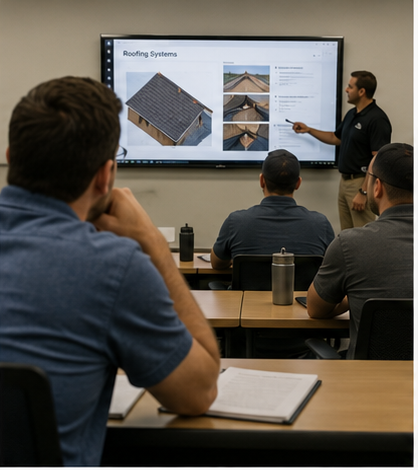
Training is where you learn how to actually inspect a house — the structure, roof, exterior, plumbing, electrical, HVAC, interiors, insulation, and ventilation — and how to write a defensible report. Approved programs range from roughly 40 to 200 hours depending on your state's mandate, and they come in three formats.
Online vs. In-Person Training
- Online self-paced courses ($400-$1,500): The most common and flexible option. Providers like InterNACHI (free for members), AHIT, ICA, and ATI offer state-specific curricula you can complete in a few weeks to a few months.
- In-person / hybrid programs ($1,000-$3,000): Classroom plus hands-on field training. More expensive but valuable if you learn better in person or want supervised practice inspections.
- Apprenticeship / mentorship: Some states require or allow supervised field inspections under an established inspector. This is the most valuable real-world experience you can get and often the fastest way to build confidence.
Make Sure the Program Is State-Approved
Whatever format you choose, make sure the program is approved by your state if you're in a licensed state. An unapproved course wastes money and time. If you already work in a construction trade, much of the technical material will be familiar, and you can move through it faster.
Step 3: Pass the NHIE (or State) Exam
The National Home Inspector Examination (NHIE) is the standardized, psychometrically validated test most licensing states accept or require. It's a 200-question multiple-choice exam administered by the Examination Board of Professional Home Inspectors, it takes about four hours, and it costs roughly $225 per attempt. It covers the inspection of structures, exteriors, roofing, plumbing, electrical, heating and cooling, interiors, insulation and ventilation, plus professional standards of practice and ethics.
Some states administer their own exam instead of, or in addition to, the NHIE. Check which applies to you in Step 1. Either way, study the relevant Standards of Practice (InterNACHI and ASHI both publish theirs), take practice exams, and don't rush to schedule before you're ready — a retake costs you another fee and weeks of delay.
| Exam Detail | NHIE |
|---|---|
| Format | 200 multiple-choice questions |
| Time allowed | ~4 hours |
| Cost | ~$225 per attempt |
| Administered by | Examination Board of Professional Home Inspectors |
| Accepted by | Most licensing states (verify yours) |
Step 4: Get Licensed and Insured
Once you've passed the exam, apply for your state license if your state requires one. The application typically asks for proof of training, your exam result, an application fee ($50 to a few hundred dollars), and proof of insurance. Some states also require a background check.
Insurance is non-negotiable, whether or not your state mandates it. Two policies matter:
- Errors & Omissions (E&O): Protects you if a client claims you missed a defect. This is the policy that keeps a single dispute from ending your business.
- General Liability: Covers property damage and bodily injury that occurs during an inspection.
Combined E&O and general liability typically runs $1,500 to $3,000 per year for a new solo inspector, varying by state, coverage limits, and claims history. Many states require you to carry a minimum coverage amount to be licensed at all. Get quotes from inspector-specific insurers, who understand the risk far better than a general business insurer.

Step 5: Buy Your Tools and Software
You don't need a truck full of gear to start. A solid starter kit costs $300 to $1,000 and includes the essentials:
- A bright flashlight and headlamp for crawlspaces and attics
- A telescoping ladder for roofs and attic access
- A moisture meter to detect water intrusion
- An outlet/GFCI tester for electrical checks
- A combustible gas detector for gas leaks
- Coveralls, gloves, knee pads, and a respirator for tight, dirty spaces
- A digital camera or phone for documenting findings
The other half of your toolkit is software. Modern inspectors don't write reports by hand — they use inspection software to capture photos and findings on-site, generate a polished report, send agreements for signature, schedule appointments, and collect payment. The right platform can cut report-writing time dramatically, which directly increases how many inspections you can do per week and therefore how much you earn. For a deeper comparison of equipment, see our home inspector equipment guide.
Step 6: Join an Association and Earn Your Certification
Joining a professional association does three things: it gives you continuing-education resources, it provides a credential clients and agents recognize, and it connects you to a community of inspectors you can learn from. The two largest are:
- InterNACHI (~$49/month): The largest association, with extensive online courses, tools, and the CPI (Certified Professional Inspector) credential. Membership often includes free training.
- ASHI (~$435/year): Prestigious, experience-based credentialing. The ASHI Certified Inspector (ACI) designation requires 250+ completed inspections and a passed exam, which makes it a stronger signal once you've built experience.
Down the road, the most prestigious marker in the industry is the InterNACHI Master Inspector designation, which requires substantial experience (1,000+ inspections or 1,000 hours of training) plus peer review. You don't need it on day one, but it's a worthy long-term goal. For the full breakdown of which credentials actually move the needle on income, read our home inspector certification guide.
Step 7: Land Your First Inspections
Getting licensed is the start, not the finish. Your income depends almost entirely on your ability to get booked — and in this business, the people who book you are usually real estate agents referring their buyer clients. The fastest way to a full schedule is to become the inspector agents trust and recommend.
Here's how new inspectors build a client base:
- Network with real estate agents. Agents send the majority of inspection referrals. Introduce yourself to local agents, attend brokerage meetings, and consistently deliver clear, fast reports. Our guide on how to become the go-to home inspector for realtors covers this in depth.
- Build a professional online presence. A simple website, a Google Business Profile, and a handful of genuine reviews go a long way for local search.
- Deliver reports fast. Agents and buyers remember the inspector who turned a clear, photo-rich report around same-day or next-day. Speed is a competitive advantage.
- Consider working for an established firm first. Many new inspectors spend their first year as an employee or sub for an established company, earning a salary or per-inspection commission while they learn the ropes and build their own reputation.
Expect your first year to be a ramp-up. Most new inspectors reach a full-time income (3-4 inspections per week) within 6 to 12 months. For a realistic month-by-month picture, read your first year in home inspection, and when you're ready to formalize the business, our guide to starting a home inspection business covers entity setup, branding, and pricing.
Total Cost & Timeline Breakdown
Adding it all up, here's what it realistically costs to go from zero to your first inspection in 2026:
| Item | Low Estimate | High Estimate |
|---|---|---|
| Training program | $400 | $1,500 |
| NHIE / state exam | $225 | $300 |
| State license & application fees | $50 | $400 |
| Starter tools | $300 | $1,000 |
| One-time startup total | ~$975 | ~$3,200 |
| Insurance (E&O + liability, annual) | $1,500 | $3,000 |
| Association membership (annual) | $435 | $600 |
On timeline: full-time students can finish training in a few weeks, while part-timers usually take two to three months. Add a few weeks to schedule and pass the exam, plus two to six weeks for license processing and insurance. Most people are inspecting within three to six months of starting. The biggest variable is how quickly you study and how fast your state's licensing board processes applications.
Frequently Asked Questions
How long does it take to become a home inspector?
Most people become a working home inspector in 3 to 6 months. The training itself can be completed in a few weeks of full-time study or two to three months part-time. Add time for scheduling and passing your exam, applying for a state license, and securing insurance. Inspectors who already work in a construction trade often move faster because the technical material is familiar.
How much does it cost to become a home inspector?
Expect to invest roughly $400 to $3,000 to get started, depending on your state and the path you choose. Online training programs run from about $400 to $1,500, the National Home Inspector Examination costs around $225, state license and application fees range from $50 to a few hundred dollars, and errors-and-omissions plus general liability insurance typically runs $1,500 to $3,000 per year. Basic inspection tools and a flashlight, ladder, moisture meter, and outlet tester add a few hundred dollars more.
Do you need a license to become a home inspector?
It depends on your state. As of 2026, most states require home inspectors to hold a state license, which usually means completing approved training, passing an exam, and carrying insurance. A number of states have no statewide licensing requirement at all. In those states you can legally inspect without a license, but earning a professional certification such as InterNACHI CPI is strongly recommended for credibility and agent referrals.
Do I need a college degree to become a home inspector?
No. Home inspection does not require a college degree. The standard requirements are a high school diploma or equivalent, completion of an approved training program, and passing the required exam in your state. This is one of the main reasons home inspection is such an accessible second career — you can qualify in months, not years, without taking on student debt.
What is the NHIE exam?
The NHIE is the National Home Inspector Examination, a standardized 200-question multiple-choice test administered by the Examination Board of Professional Home Inspectors. Most licensing states accept or require it. It covers the inspection of structures, exteriors, roofing, plumbing, electrical, heating and cooling, interiors, insulation, and professional practice. The exam takes about four hours and costs roughly $225 per attempt.
Is becoming a home inspector worth it in 2026?
For many people, yes. Home inspection offers a low barrier to entry, a flexible schedule, no college degree requirement, and the potential to earn $50,000 to $150,000 or more as you build your client base. Demand is tied to real estate transactions, which makes it relatively recession-resistant since homes still sell and still need inspections in slower markets. The trade-off is that income in your first year is usually modest while you build referrals.
Build Your Inspection Business From Day One
InspectorData gives new inspectors AI-powered reports, online scheduling, instant quoting, digital agreements, and payment processing — everything you need to look professional and book more inspections. $79/month with a 90-day free trial, no credit card required.
Start Your 90-Day Free Trial