
At some point, every busy solo inspector faces the same wall: there are only so many inspections you can personally complete in a week. You're turning away business, missing family events, and burning out — but the idea of hiring someone feels risky. This guide walks you through the exact process of scaling from one inspector to a multi-inspector firm, including when to do it, how to find great inspectors, and how to maintain quality as you grow.
The Solo Inspector Ceiling
A solo inspector doing 1.5 inspections per day, 5 days per week, 48 weeks per year completes about 360 inspections annually. At $350 average revenue per inspection, that's $126,000 in gross revenue — a solid income, but with a hard cap. (For where that lands against the field, see how much home inspectors make.) To earn more, you need to either raise prices, add services, or add inspectors.
| Business Model | Max Inspections/Year | Revenue Potential | Owner Involvement |
|---|---|---|---|
| Solo inspector | 300–400 | $90,000–150,000 | 100% in the field |
| Solo + part-time | 400–600 | $130,000–220,000 | 80% in the field |
| 2-inspector firm | 600–800 | $200,000–320,000 | 50–70% in the field |
| 3-inspector firm | 900–1,200 | $300,000–480,000 | 30–50% in the field |
| 5+ inspector firm | 1,500–2,500+ | $500,000–1,000,000+ | 10–30% in the field |
When You're Ready to Scale
The right time to hire is before you desperately need to — not after. Watch for these signals:
| Signal | What It Means | Urgency |
|---|---|---|
| Turning away 3+ inspections/week | Demand exceeds your capacity | High — hire now |
| Booking 2+ weeks out consistently | Agents starting to go elsewhere | High — lose relationships if you wait |
| Working 6–7 days/week regularly | Unsustainable pace, burnout risk | Medium-high |
| Revenue plateau for 6+ months | Can't grow revenue without capacity | Medium |
| Missing personal events for inspections | Quality of life suffering | Medium |
| Report quality declining from fatigue | Liability and reputation risk | High |
The Financial Readiness Checklist
Before hiring, confirm you have:
- 3+ months of operating expenses in reserve
- Enough consistent demand to keep a second inspector busy 20+ inspections/month
- A profit margin above 40% (hiring will temporarily reduce this to 25–35%)
- A documented inspection process that can be taught
- The time to train someone without destroying your own revenue
What Must Be in Place Before Hiring
The inspectors who fail at scaling usually hire before their systems are ready. The inspector you hire will represent your business and your reputation. Without documented standards, quality drift is inevitable.
Systems That Must Exist Before Day 1
- Inspection checklist and protocol — not just "check the roof," but specific steps, photos required, language to use
- Report template — exactly how reports should look, what's required in each section
- Client communication scripts — what to say before, during, and after the inspection
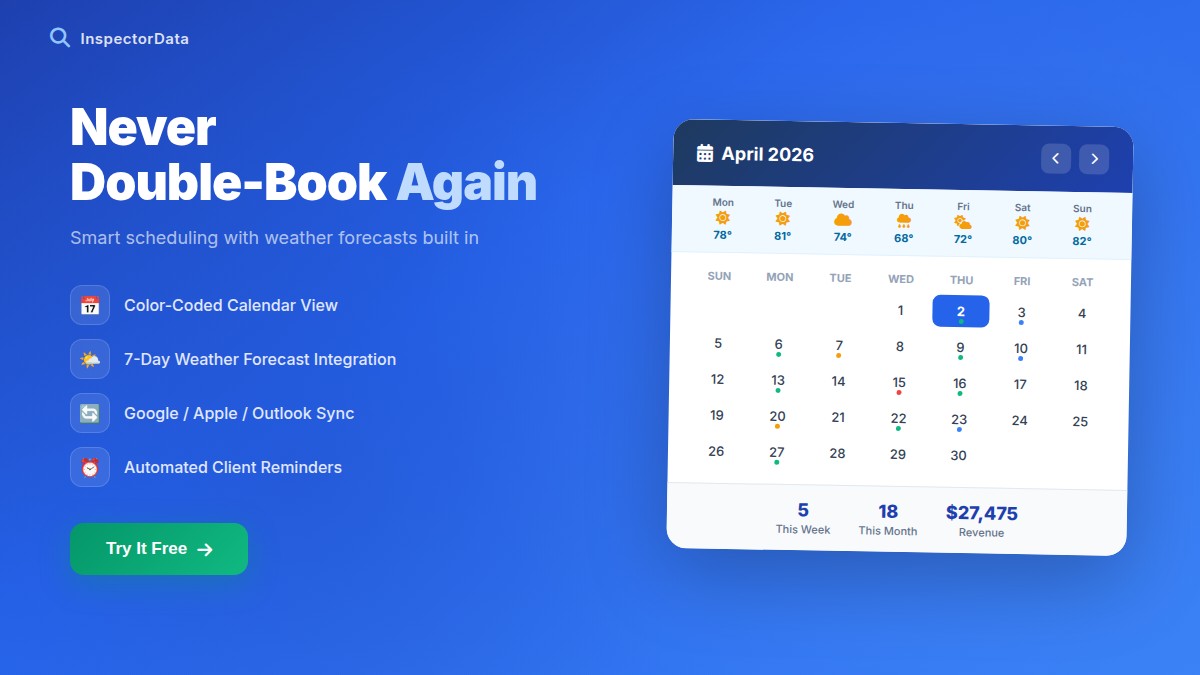
- Booking and scheduling system — automated, not manual phone tag
- Quality control process — how you review reports before delivery. Choosing the right inspection software before you scale ensures every inspector on your team produces consistent, branded reports from day one.
- Brand standards — truck signage, uniform, business card, email signature
Finding and Hiring Your First Inspector
Where to Find Candidates
- InterNACHI and ASHI job boards — inspectors actively looking for positions
- Construction and contracting trades — former contractors, electricians, plumbers make excellent inspectors
- Your client network — buyers who expressed interest, handy professionals
- Indeed/LinkedIn — posting for "field inspector" or "home inspector" with training offered
- Inspector training schools — new graduates looking for mentorship
What to Look For
Technical knowledge can be taught. Attitude and communication skills cannot. Prioritize candidates who are:
- Detail-oriented and methodical (not rushing)
- Excellent communicators who can explain complex findings simply
- Calm under pressure (difficult clients, scary findings)
- Reliable — on time, every time
- Coachable and receptive to feedback
The Interview Process
- Phone screen (15 min) — basic fit, communication style, availability
- Ride-along on a real inspection — see how they observe and communicate
- Mock report review — can they document findings clearly?
- Reference check — especially from construction/field supervisors
- Conditional offer pending license (if required in your state)
Training and Quality Standards
The 90-Day Training Program
| Phase | Duration | Activities | Milestone |
|---|---|---|---|
| Shadow Phase | Weeks 1–3 | Ride-along on all inspections, observe and take notes | Can identify 90% of findings before you do |
| Assist Phase | Weeks 4–6 | Lead sections of inspection, you observe and correct | Leads inspection with minimal correction needed |
| Supervised Solo | Weeks 7–10 | Conducts inspection solo, you review report before delivery | Report approved with minimal edits |
| Independent | Weeks 11–12 | Full solo inspections, spot-check QC | Client feedback equals yours |
| Ongoing QC | Monthly | Random report review, client feedback review, coaching sessions | Consistent quality maintained |
Maintaining Quality at Scale
Quality drift is the biggest risk of scaling. Counter it with:
- Monthly report audits — random review of 2–3 reports per inspector per month
- Client feedback tracking — monitor Google reviews mentioning each inspector by name
- Calibration inspections — occasionally inspect the same property and compare findings
- Weekly team huddles — share unusual findings, reinforce standards, celebrate wins
Compensation Structures That Work
| Structure | Rate | Pros | Cons |
|---|---|---|---|
| % of Inspection Fee | 40–55% of base fee | Scales with revenue, motivates volume | May incentivize rushing |
| Flat Rate Per Inspection | $100–175/inspection | Simple, predictable | No incentive for premium properties |
| Hourly (Employee) | $20–35/hour | Simple, no rush incentive | No volume motivation |
| Base + Commission | $2,500–3,500/mo + 10–20% | Income security + incentive | More complex accounting |
Contractor vs. Employee
Most inspection company owners prefer to start with independent contractors. This is legally acceptable in most states IF the inspector sets their own hours, uses their own tools, and controls their own work methods. Consult a local employment attorney before classifying anyone as a contractor — misclassification carries significant penalties.
Growth Stages: 1 to 5+ Inspectors
| Stage | Focus | Owner Role | Revenue Range |
|---|---|---|---|
| Solo (1 inspector) | Build systems, max personal capacity | 100% inspector | $80K–150K |
| + 1 Inspector | Train and quality control | 70% inspector, 30% manager | $150K–280K |
| + 2–3 Inspectors | Marketing growth, hire office help | 40–60% inspector, rest managing | $280K–500K |
| + 4–6 Inspectors | Systems, brand, potential office manager | 20–30% inspector, rest CEO | $500K–900K |
| 7+ Inspectors | Regional growth, possible franchise | CEO/owner, out of field | $900K+ |
Mistakes That Derail Scaling
| Mistake | Consequence | Prevention |
|---|---|---|
| Hiring too early | Carrying labor cost without demand to support it | Wait until consistently turning down 3+/week |
| Hiring too late | Burning out, losing agents to competitors | Start hiring process when you first notice capacity strain |
| Skipping training | Quality drops, bad reviews, lost clients | Invest 6–10 weeks in proper training |
| No quality control | Inconsistent reports damage brand | Monthly audit of all inspectors |
| Wrong compensation model | Rush-job mentality, inspector turnover | Build in quality incentives, not just volume |
| Not delegating marketing | Growth stalls, owner overwhelmed | Marketing systems must exist before scaling operations |
Scale Your Inspection Business with the Right Tools
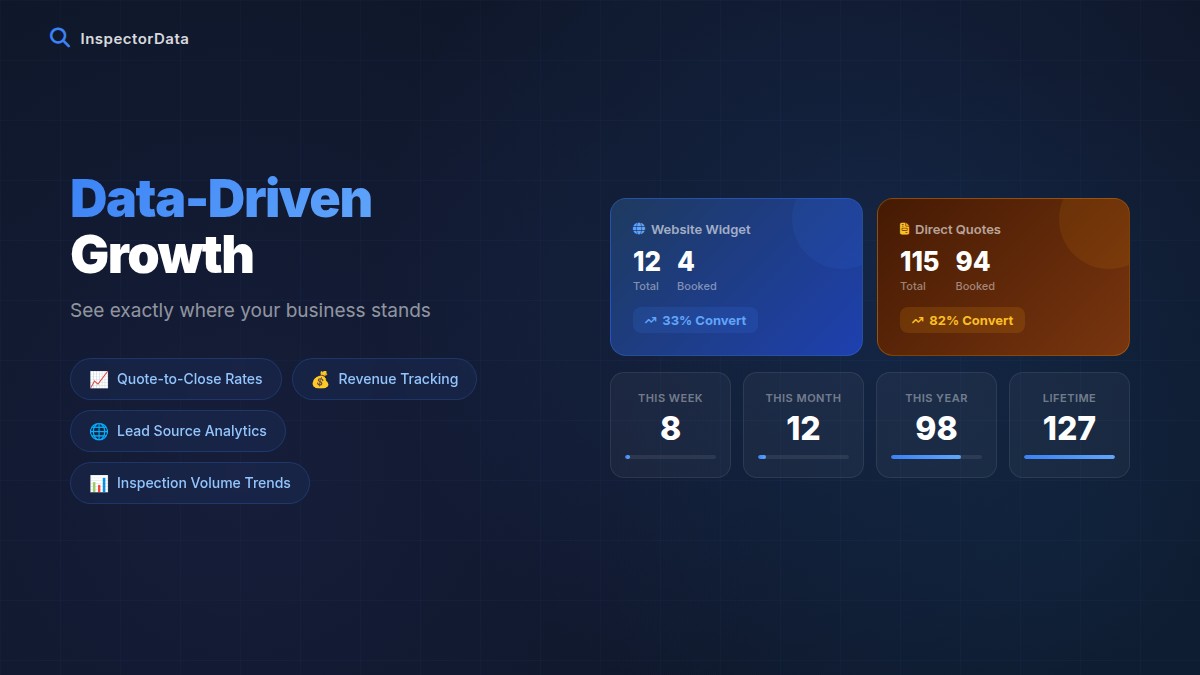
InspectorData supports multi-inspector firms with team management, quality control workflows, and scheduling that scales. When you add your second inspector, you need systems that grow with you.
Try InspectorData Free for 30 DaysScales from solo to multi-inspector team.