

The inspection industry is physically demanding, mentally intensive, and emotionally variable — every day brings different homes, different clients, and different challenges. The inspectors who consistently perform at the highest level and build the most successful businesses do it through intentional daily routines that prepare them physically, mentally, and operationally for the day ahead.
Why Routine Separates High Earners
Routines reduce decision fatigue. When your morning preparation is systematic and automatic, you arrive at the inspection site with full mental energy to focus on the work that matters — not depleted from making 40 micro-decisions before 8 AM. High-performing inspectors report that their routines aren't rigid — they're liberating.
| Morning Approach | Mental Energy at Inspection Start | Client Experience Impact | Error Risk |
|---|---|---|---|
| Reactive/chaotic | 40–60% | Rushed, distracted | Higher |
| Basic preparation | 70–80% | Professional | Standard |
| Intentional routine | 90–100% | Present, thorough, engaged | Lower |
The Pre-Dawn Hour (5:00–6:00 AM)
Many high-performing inspectors start their day before dawn. This isn't about suffering — it's about protecting quiet time before phones, clients, and the day's demands consume your attention.
Physical Movement (20–30 minutes)
Inspection work is physically demanding: ladder climbing, crawlspace navigation, constant walking. Physical fitness directly affects your capacity and performance. Morning exercise — a brisk walk, gym session, yoga, or stretching — warms up the body that will spend the next 6–8 hours in challenging positions. Inspectors who maintain consistent exercise routines report significantly less physical fatigue and back/joint pain over a career.
Personal Development (15–20 minutes)
High-earning inspectors invest in their professional development daily. A 15-minute daily habit of reading, listening to industry podcasts, or reviewing inspection standards adds up to 90+ hours per year of professional development — while competitors do nothing. This habit compounds into expertise that justifies premium pricing.
Business Planning (10 minutes)
Review your day before it starts. Look at all inspections scheduled, confirm addresses and special requirements (pets, alarm codes, lockboxes), verify equipment is loaded, and identify any callbacks or follow-ups needed from previous inspections. A 10-minute morning review prevents the "I forgot to bring X" or "I missed the follow-up with Y" mistakes that compound over time.
The Preparation Window (6:00–7:30 AM)
Equipment Check (10 minutes)
Your inspection kit should be checked every single morning, not assumed to be ready. Inspectors who develop a systematic equipment checklist eliminate the embarrassment and liability of arriving without critical tools:
- Flashlight (and spare batteries or charged backup)
- Thermal camera (charged)
- Moisture meter (calibrated)
- Gas detector (fresh/charged)
- Carbon monoxide detector
- Electrical tester (GFCI, outlet)
- Ladder (in or on vehicle)
- Drone (if used for roof inspection)
- Camera (charged, memory card cleared)
- Tablet/phone for report software (charged)
- Business cards, door hangers
- Pre-inspection agreement copies
Property Research (15 minutes)
Before arriving at an inspection site, high-performing inspectors do 15 minutes of property research:
- Zillow/county records for square footage, age, major renovations
- Google Maps satellite view of the roof and property
- Public records for permits — what work has been done with and without permits?
- Neighborhood-specific issues to look for (high water table areas, aging infrastructure, specific construction era problems)
Client and Agent Communication (5 minutes)
Send a morning confirmation to the client and agent: "Good morning! I'm confirmed for your inspection today at [Address] at [Time]. I'll be a few minutes early to start set-up. Please make sure [any specific access requirements] are ready. I look forward to meeting you!"
This single text or email eliminates the most common inspection morning delay — access issues — and signals professionalism before you've done anything else.
En Route to the Inspection
Mental Preparation
The drive to an inspection is a transition moment. Use it intentionally:
- Listen to an inspection-related podcast or audiobook
- Review any specific concerns about today's property (older home, known water issues, complex system)
- Set a mental intention for the inspection: "I will be fully present with this client today"
Arrive 10 Minutes Early
Always arrive before the client and agent. Use those 10 minutes to: walk the exterior perimeter, note any immediate major concerns, check roof accessibility, and compose yourself. An inspector who is composed and ready when clients arrive makes a completely different first impression than one who pulls up at the same time and scrambles to get equipment ready.
The Inspection Day Protocol
The Consistent Inspection Route
Always inspect in the same order. Every house, every time. Your consistent route ensures you never miss sections, your field notes are automatically organized, and your mental processing becomes automatic rather than deliberate. See our guide on streamlining inspection reports for the optimal route structure.
The Client Check-In Mid-Inspection
About 45–60 minutes into the inspection, if the client is present, check in briefly: "I've completed the exterior and roof, I'm working through the basement and mechanicals now. Do you have any specific concerns about the house that you'd like me to pay particular attention to?" This question often surfaces information the client was holding — "Actually, the seller mentioned some water issues in the basement" — that changes what you look for next.
The Post-Inspection Summary
End every inspection with a verbal summary before anyone leaves. Prioritize: safety concerns first, major defects second, maintenance items third. Keep it clear and jargon-free. Thank everyone for their time and confirm your report delivery timeline.
End-of-Day Routine for Business Growth
High-performing inspectors don't just finish the inspection and stop. The end-of-day routine is where business growth happens:
- Same-day report delivery: Complete and send the report before dinner, every day. This is the single biggest differentiator for agent referrals.
- Agent thank-you text: Text the referring agent: "Report sent to your client — please let me know if you have any questions about findings. Thanks for the referral!"
- Follow-up log: Note any follow-ups needed (callbacks to answer questions, review requests to send in 24 hours, agent notes)
- Equipment prep for tomorrow: Recharge everything tonight so tomorrow's equipment check is quick
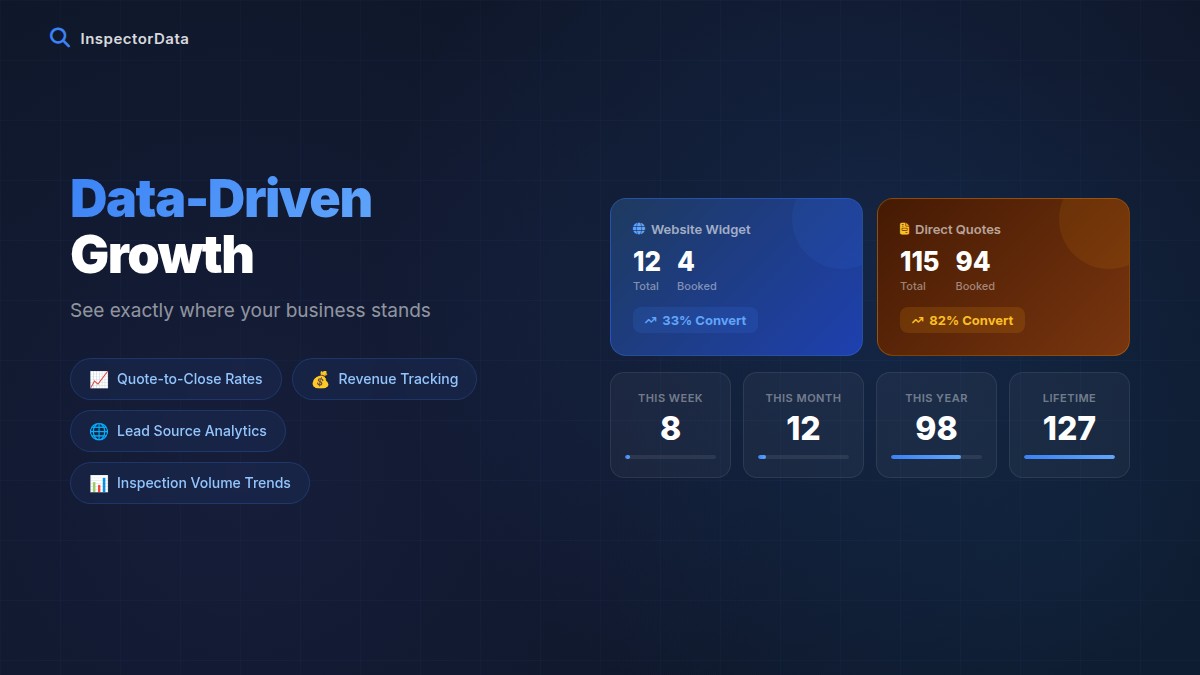
- Revenue tracking: Note today's revenue in your weekly tracker — staying aware of your numbers weekly prevents slow-season surprises
Building a Sustainable Schedule
One of the most common inspector burnout causes is an unsustainable schedule — too many inspections per day, too many days per week, no intentional recovery time. High performers build sustainability into their schedule design:
| Schedule Model | Inspections/Week | Annual Revenue | Sustainability |
|---|---|---|---|
| Grind (6 days, 3/day) | 15–18 | $270K–324K | Poor — burnout in 2–3 years |
| Balanced (5 days, 2–3/day) | 10–15 | $180K–270K | Good — maintainable long-term |
| Premium (4 days, 2/day) | 8 | $144K | Excellent — with premium pricing |
The "grind" model earns more on paper but comes at the cost of quality, relationships, and health. The "premium" model — fewer inspections at higher prices, with strategic marketing time built in — creates the most sustainable and ultimately profitable career.
Your morning routine is your daily investment in the inspector you want to be and the business you want to build. Start with one or two changes. Add more as each becomes automatic. Within 30 days, you'll have a morning system that makes you more thorough, more professional, and more able to handle the full demands of running a successful inspection business.
Run Your Business Like a High-Performer
InspectorData handles the operational systems — booking, reporting, follow-up — so you can focus on the work that matters. Start your free trial today.
Try InspectorData Free for 30 Days