

Whether you started your inspection business last month or last decade, your company is somewhere in a predictable five-stage journey. Understanding which stage you're in — and specifically what each stage requires — is the difference between steady growth and years of frustration spinning your wheels.
Stage 1: Survival (Year 0–1)
Revenue Range: $0 – $80,000
Every inspection business starts in survival mode. Your singular focus is generating enough revenue to cover your costs and your living expenses. Marketing, systems, and long-term planning take a back seat to the immediate question: "Will I have enough business to survive this month?"
| Focus Area | Stage 1 Priority | Key Actions |
|---|---|---|
| Revenue | Critical | Every inspection matters; price competitively |
| Marketing | High | Agent outreach, Google Business, referral asks |
| Systems | Low | Basic booking and reporting only |
| Hiring | None | Too early; overhead would be fatal |
| Profit margin | Low priority | Just cover costs and build the base |
The Stage 1 Challenge
Most inspectors who fail, fail here. They underestimate how long it takes to build a referral network, run out of capital before the business gains momentum, or price themselves so low they can't survive even when fully booked. The inspectors who make it through Stage 1 are relentlessly focused on agent relationships and delivering excellent work that generates word-of-mouth.
What Advances You from Stage 1
Consistent 15+ inspections per month, a growing base of regularly referring agents, and enough cash flow to cover 3 months of expenses. When you hit these markers, you're entering Stage 2.
Stage 2: Stabilization (Year 1–2)
Revenue Range: $80,000 – $200,000
Stabilization means you're no longer wondering if the business will survive — you're wondering how to grow it consistently. You have a handful of reliable referring agents, your Google reviews are building, and you're doing 20–35 inspections per month. The business feels real.
| Focus Area | Stage 2 Priority | Key Actions |
|---|---|---|
| Revenue | High | Add ancillary services; raise prices modestly |
| Marketing | High | Google SEO, more agent relationships, reviews |
| Systems | Medium | Booking automation, report templates |
| Profit margin | Medium | Target 25–35% net; track expenses |
| Personal time | Low | Accept the hustle; rest comes later |
The Stage 2 Trap
The most common Stage 2 trap is "comfortable busyness" — you're making $150,000/year, working 50 hours a week, and the thought of adding staff feels risky. Many inspectors stay in Stage 2 indefinitely because growth requires investment they're afraid to make. Breaking through requires intentional systems-building and a willingness to invest in infrastructure before you absolutely need it.
Stage 3: Systemization (Year 2–4)
Revenue Range: $200,000 – $500,000
Stage 3 is where businesses either break through or stagnate permanently. The defining challenge: transitioning from a business that runs because of you, to a business that runs because of systems. This is when your first hire happens — and everything gets harder before it gets easier.
| Focus Area | Stage 3 Priority | Key Actions |
|---|---|---|
| Systems | Critical | Document everything; operations manual |
| First hire | Critical | Part-time admin or second inspector |
| Pricing | High | Raise prices to support overhead; add packages |
| Marketing | Medium | More agent relationships; begin content marketing |
| Owner mindset | High | Begin transitioning from technician to manager |
The Systems That Matter Most at Stage 3
- Booking and scheduling: Clients book without calling you
- Confirmation and prep: Automated emails tell clients exactly what to expect
- Report delivery: Same-day delivery standard with professional templates
- Review collection: Automated review request at Day 1 after every inspection
- Financial tracking: Monthly P&L review; weekly cash position awareness
Stage 4: Scaling (Year 4–7)
Revenue Range: $500,000 – $2,000,000
Stage 4 inspection companies have multiple inspectors, a team structure, and real brand recognition in their market. The owner is transitioning from doing inspections to managing the business that does inspections. Revenue is driven by systems, reputation, and team performance — not individual heroics.
| Focus Area | Stage 4 Priority | Key Actions |
|---|---|---|
| Team building | Critical | Hire inspector #2, #3; admin team |
| Quality control | Critical | Inspection QC standards; client satisfaction scores |
| Marketing | High | Digital marketing, SEO, content strategy |
| Owner role | High | CEO activities: strategy, culture, key relationships |
| Valuation building | Medium | Track metrics that drive acquisition value |
The Stage 4 Inflection Point
At $1M+ revenue, your business is attractive to strategic buyers. The decisions you make at Stage 4 significantly impact both your growth trajectory and your eventual exit options. Build your team, document your systems, and track the KPIs that matter to acquirers: revenue per inspector, client satisfaction scores, agent retention rates, and revenue diversification.
Stage 5: Maturity and Leverage (Year 7+)
Revenue Range: $2,000,000+
A truly mature inspection company operates with a management layer between the owner and operations. The founder has transitioned fully to CEO — focused on vision, culture, key partnerships, and long-term strategy rather than daily operations. Revenue comes from multiple inspectors, multiple service lines, and potentially multiple locations.
| Focus Area | Stage 5 Priority | Key Actions |
|---|---|---|
| Leadership team | Critical | Operations manager, marketing director, lead inspector |
| Exit planning | High | Assess acquisition vs. continued growth |
| Brand value | High | National recognition; franchise potential |
| Passive income | High | Business income with minimal owner involvement |
| Legacy | Medium | Industry contribution; mentorship |
Why Inspectors Get Stuck Between Stages
The transitions between stages are where most inspection businesses stall. Here are the most common sticking points:
- Stage 1 → 2: Not building referral relationships early enough; pricing too low to ever become profitable
- Stage 2 → 3: Fear of hiring; doing everything personally instead of documenting and delegating
- Stage 3 → 4: Failure to raise prices after adding overhead; trying to be both inspector and CEO simultaneously
- Stage 4 → 5: Not building a management layer; owner remains the key person for all critical decisions
How to Move Through Stages Faster
The inspectors who advance quickly share common characteristics:
- They hire before they have to: Building capacity slightly ahead of demand accelerates growth
- They invest in systems early: Documentation and automation in Stage 2 prevents the Stage 3 wall
- They raise prices regularly: Annual price increases fund the infrastructure each stage requires
- They seek mentorship: Learning from inspectors one or two stages ahead shortens the learning curve dramatically
- They work on the business, not just in it: Every stage requires some time invested in strategic activities beyond inspections
Knowing which stage you're in isn't just academic — it tells you exactly where to focus your energy, what to invest in, and what not to spend time on. Apply stage-appropriate strategies and your trajectory will accelerate. Try to skip stages or apply the wrong thinking, and you'll spin in place.
Build a Business That Advances Through Every Stage
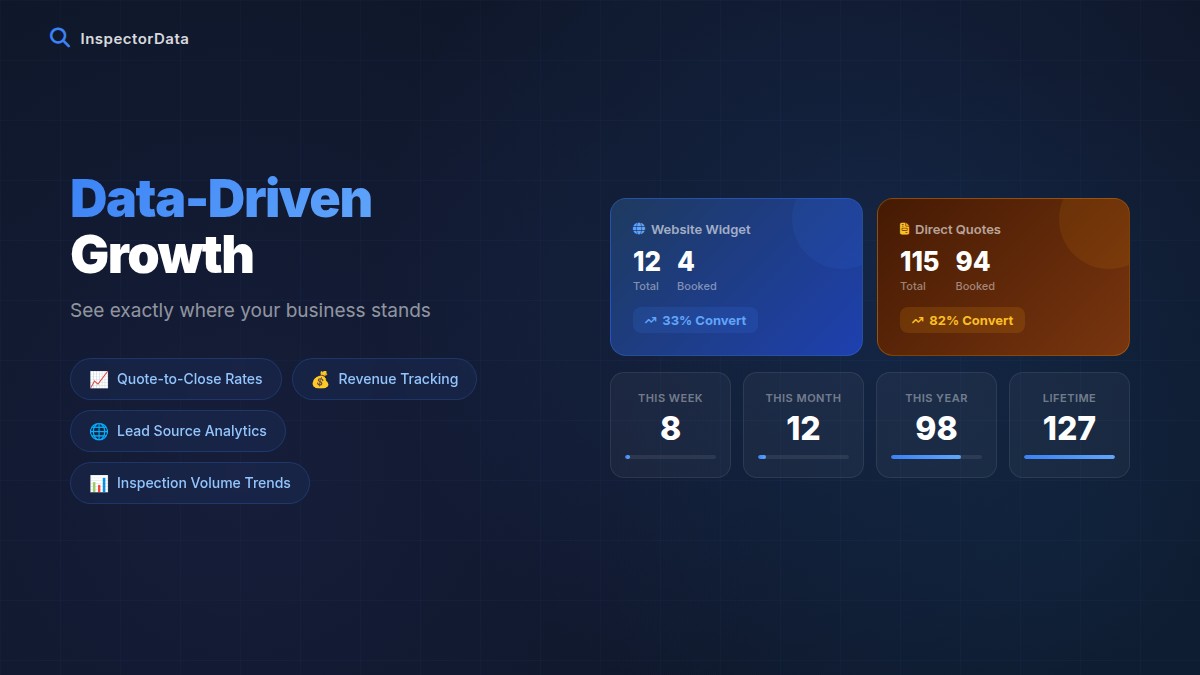
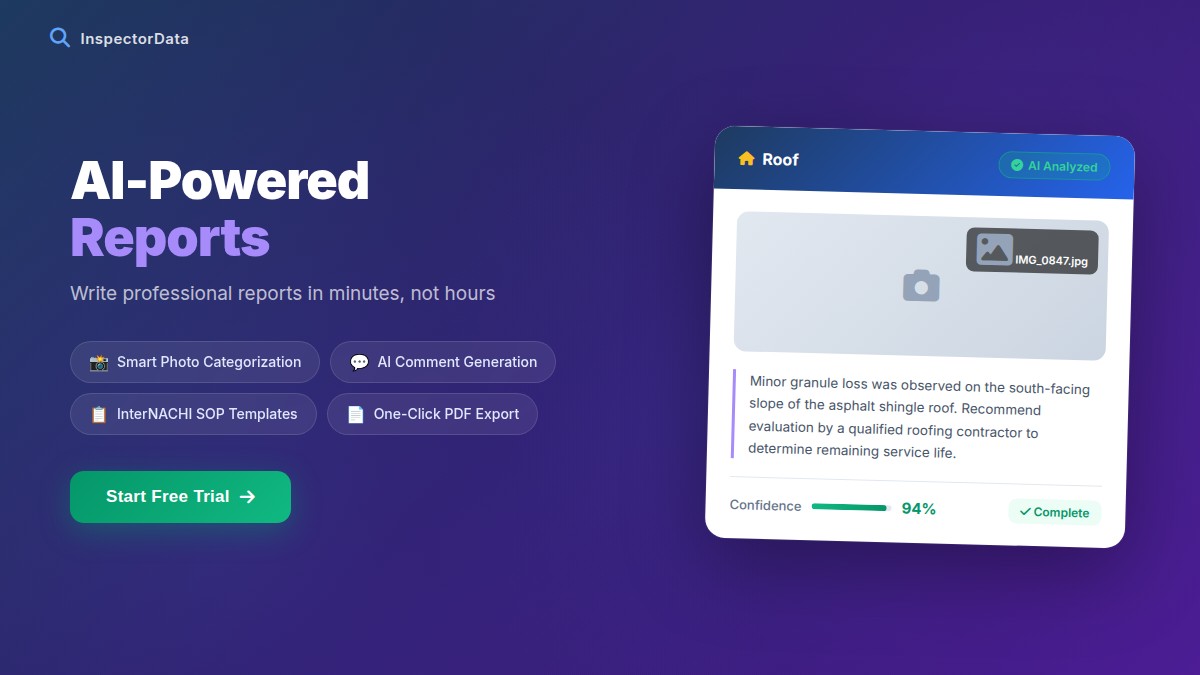
InspectorData gives you the professional systems, automation, and client management tools that every stage of a growing inspection business needs. Start your free trial today.
Try InspectorData Free for 30 Days